“Need Your Love” is Ella’s most recent track release. The romanian singer officially made public her last project during the RMA music event (Romanian Music Awards). Iulian Moga is the one who directed the making of “Need Your Love” video, while Ella’s styling completed succesfully the footage. As for the filming location, the crew choosed wisely the only palm-beach in Europe, somewhere in Creta.
Showing posts with label extended mix. Show all posts
Showing posts with label extended mix. Show all posts
Saturday, November 13, 2010

Wednesday, November 10, 2010
Usher Ft. Pitbull – DJ Got Us Fallin’ In Love (Jump Smokers Extended Remix)

Their Ultra Records debut album “Kings of the Dancefloor” is packed with body thumpin’ tracks including the lead single “Dance Rock Shake Pop” (featuring Alex Peace), the party anthem “Rock It Like It’s Spring Break” (featuring Pitbull), the drunk text warning “Faded”, and the appropriately named “Club Rockers” (featuring Honorebel).
Wednesday, October 13, 2010
Naguale - Get Up (Julyan Dubson & K-Liv Extended Mix)
The MTV Concept
"MTV (Music Television) is the oldest and most influential American cable network specializing in music?related programming. It was launched on August 1, 1981, with the words "Ladies and gentlemen, rock and roll," spoken on camera by John Lack, one of the creators of MTV. This introduction was immediately followed by the music?video clip Video Killed the Radio Star, featuring a band called the Buggles. The title proved somewhat prophetic as MTV greatly transformed the nature of music?industry stardom over the next several years. At the same time, MTV became a major presence in the cable?TV industry and in fact in the overall American cultural landscape.
 One of the earliest and greatest cable success stories, MTV was established by Warner Amex Satellite Entertainment Company (WASEC) after extensive marketing research. The key to MTV's viability, at least initially, was the availability of low-cost programming in the form of music videos. Originally these were provided free by record companies, which thought of them as advertising for their records and performers.

MTV presented one video after another in a constant "flow" that contrasted with the discrete individual programs found on other television networks. Clips were repeated from time to time according to a light, medium, or heavy "rotation" schedule. In this respect, MTV was like Top 40 radio (it even had video jockeys, or vjs, similar to radio djs). Moreover, it soon became apparent that MTV could "break" a recording act (move it into prominence, even star status), just as radio had done for decades.

Throughout its so-called third phase, MTV has diversified its musical offerings, most notably into rap, dance music, and heavy metal. To some extent these genres have been segregated into their own program slots (Yo! MTV Raps, Club MTV, and Headbangers' Ball, respectively). At the same time, the move toward discrete programs has increasingly become a move away from music video. In the process, MTV has become more like a full?service network, offering news, sports, sitcoms, documentaries, cartoons, game shows, and other traditional TV fare. Often these programs are also musical in some sense (Beavis and Butt-Head), but sometimes they are not (reruns of Speed Racer).
Music video and MTV are major ingredients of television programming internationally. MTV Europe, launched in 1987, was followed by an Asian service in 1991 and MTV Latino in 1993. VH1 seems poised to follow a similar course, having established a European service in 1994. Both economically and aesthetically, MTV has wrought major changes in the entertainment industries. By combining music with television in a new way, MTV has charted a path for both industries (and movies as well) into a future of postmodern synergy. "
This is just a preview of the original text. Read more on www.museum.tv. Article written by Gary Burns. All rights reserved to specified author and webpage.
Dj Jungle & SRG - Sweet Love (Extended Mix)
The Colour of Music
"One of the basic elements of music is called color, or timbre (pronounced "TAM-ber"). Timbre describes all of the aspects of a musical sound that do not have anything to do with the sound's pitch, loudness, or length. In other words, if a flute plays a note, and then an oboe plays the same note, for the same length of time, at the same loudness, you can still easily distinguish between the two sounds, because a flute sounds different from an oboe. This difference is in the timbre of the sounds.
 Timbre is caused by the fact that each note from a musical instrument is a complex wave containing more than one frequency. For instruments that produce notes with a clear and specific pitch, the frequencies involved are part of a harmonic series. For other instruments (such as drums), the sound wave may have an even greater variety of frequencies. We hear each mixture of frequencies not as separate sounds, but as the color of the sound. Small differences in the balance of the frequencies - how many you can hear, their relationship to the fundamental pitch, and how loud they are compared to each other - create the many different musical colors.
The harmonics at the beginning of each note - the attack - are especially important for timbre, so it is actually easier to identify instruments that are playing short notes with strong articulations than it is to identify instruments playing long, smooth notes.

The harmonics at the beginning of each note - the attack - are especially important for timbre, so it is actually easier to identify instruments that are playing short notes with strong articulations than it is to identify instruments playing long, smooth notes.
The human ear and brain are capable of hearing and appreciating very small variations in timbre. A listener can hear not only the difference between an oboe and a flute, but also the difference between two different oboes. The general sound that one would expect of a type of instrument - a trombone for example - is usually called its timbre or color. Variations in timbre between specific instruments - two different trombones, for example, or two different trombone players, or the same trombone player using different types of sound in different pieces - may be called differences in timbre or color, or may be called differences in tone or in tone quality. Tone quality may refer specifically to "quality", as when a young trombonist is encouraged to have a "fuller" or "more focussed" tone quality, or it can refer neutrally to differences in sound, as when an orchestral trombonist is asked to play with a "brassy" tone quality in one passage and a "mellow" tone quality in another.
Many words are used to describe timbre. Some are somewhat interchangeable, and some may have slightly different meanings for different musicians, so no attempt will be made to provide definitions. Here are a few words commonly used to describe either timbre or tone quality.
- Reedy
- Brassy
- Clear
- Focussed or unfocussed
- Breathy (pronounced "BRETH-ee")
- Rounded
- Piercing
- Strident
- Harsh
- Warm
- Mellow
- Resonant
- Dark or Bright
- Heavy or Light
- Flat
- Having much, little, or no vibrato (a controlled wavering in the sound); or narrow or wide, or slow or fast, vibrato."
Article source: www.cnx.org, written by Catherine Schmidt-Jones. All rights reserved to specified author and webpage.
Tuesday, September 14, 2010
Dan Balan - Justify Sex (Pytter Jay Dee Extended Mix)
"Born in Moldova and currently living in New York, Dan is a precocious talents as a singer, songwriter and producer.

Having released their first album in 1999, O-Zone achieved worldwide success through a series of hit singles such as ‘Despre Tine’ and ‘Dragostea Din Tei’. ‘Dragostea Dei Tei’ reached #1 in over 30 countries worldwide, hit #3 in the UK sales chart and went on sold over 12,000,000 copies worldwide. It was the one of the best selling singles throughout Europe and Japan in 2004 and 2005 respectively and was covered by over 200 artists in 14 different languages. O-Zone’s best-selling album - the multi-platinum ‘DiscOzone’ (2004) – sold over 3,500,000 copies and was hugely successful in Japan.
Following on from the success of O-Zone, Dan Balan subsequently moved to Los Angeles to focus on his solo material. Working alongside producer Jack Joseph Puig, who had previously worked with John Mayer, Sheryl Crow, No Doubt and The Rolling Stones, to produce the record, Balan developed a unique and captivating signature sound for his debut solo album before developing his Crazy Loop alias.

Following the release of several successful singles and an LP under the Crazy Loop moniker, for 2010, Dan is now closely exploring the more mature and sophisticated direction to his writing and is ready to drop his second album as a solo artist and a fresh new smash hit single called ‘Chica Bomb’. Recorded in the U.S. and accompanied by a video directed by Hype Williams, whose previously credits include working on videos for the like of Missy Elliot, Kelis, LL Cool J and Jay Z, ‘Chica Bomb’ is set to be yet another global smash in Dan Balan’s discography.
In addition to his talents in the studio, writing, recording and producing his own music, Dan Balan is also a dynamic and experienced performer. Having toured with O-Zone in the early part of his career, Dan now performs regularly as a solo artist and is currently touring extensively throughout Europe playing shows from Paris to Moscow and Athens. Dan is also making a number of high profile TV appearance in his native Romania and throughout Germany to promote his forthcoming album.
Young, dynamic and talented; Dan Balan has a unique song-writing talent and an enviable discography of hit records but he is only just getting started. With the new ‘Chica Bomb’ single set for mainstream domination, a new artist in the pipeline and a summer of sold-out shows across Europe."
Article source: www.danbalan.com. All rights reserved to the author(s) in the specified source.
Monday, September 13, 2010
DJ Robert Georgescu & Lara - Beside You (Extended Mix)
Wiring an Amplifier and Two Subwoofers in Bridge Mode
"Bridging an amplifier and two subwoofers results in increased power output through maximum voltage transfer and hence it becomes very useful to know how to bridge an amplifier and two subwoofers. It essentially means combining four channels of an amplifier into two and using it to power two subwoofers. Bridging an amplifier has immense benefits as it produces almost four times the amount of power as it would if it were not bridged.
To bridge an amplifier and two subwoofers, you will need the following:
- Speaker wire
- Wire cutters
- Connectors
The step by step guide to bridge an amplifier and two subwoofers:
- The first thing to do is to wire the subwoofers. Take two speaker wires and cut them long enough so that they can connect the amplifier to the subwoofers. Now using a wire cutter, take off about a centimeter of plastic covering off the two ends of the two wires so as to expose the positive and negative strands of the copper wire beneath.

- Now, using a connector connect one end of the two strands with the subwoofer terminal. Similarly, use another connector and connect one end of the speaker wire with the other subwoofer.
- The next step is to bridge the amplifier. For this purpose, it is necessary to trace the amplifier terminals. Each channel of the amplifier has two terminals, positive and negative.
- Then, bridge channels one and two of the amplifier to power one subwoofer and bridge channels three and four to power the second subwoofer. This is done by connecting the positive polarity of one wire with the positive terminal of channel one and negative polarity of the same strand of the wire with the negative terminal of channel two. This step bridges channel one and two to power one subwoofer.
- Similarly, connect the positive polarity of the other wire with the positive terminal of channel three and the negative polarity of the same wire to the negative terminal of channel four. This step bridges channel three and four to power the second subwoofer.
- This completes the process of bridging an amplifier and two subwoofers.One has to be very careful while attempting to bridge an amplifier. Make sure that you bridge only that amplifier which can handle the bigger amplified power load. Do not bridge an amplifier that becomes unstable with the increased power load or where the speakers cannot withstand the amplified power. The best course is to check the instructions manual or the product related paperwork before beginning to bridge."
Article source: www.mademan.com, written by Tabitha Dye. All rights reserved to the specified author and webpage.
Saturday, August 28, 2010
Juliet & Romeos - Give Into My Love (Extended, Snoop Dogg Mashup)
Types of Keyboards and Synthesizers

Apart from electronic keyboards there are also synthesizers that are more technologically advanced than the regular keyboards. A sampler with digital sound recording capabilities is almost a must with them.
Then there are something known as a workstation that are like a complete studio packed in one device. The workstations come with highly advanced features like samplers, rhythms and percussion etc. You really would not need even a single additional instrument if you are on a work station to create any kind of music.
 Some electronic keyboards also have MIDI or Musical Instrument Digital Interface capability that lets them get connected and communicate with other computers or any kind of electronic instrument. If you are a piano lover and can not indulge in the real thing, you can always go for a digital piano which is lower at costs and highly portable too. It can be used by professional musicians because of it quite advanced features and technology.

Features to Consider
The standard that you will get from most of the electronic keyboards is 128 of acoustic and electronic instruments and at least 47 prerecorded sounds. These prerecorded sounds are the basic rhythms that you get for different types of music. More advanced keyboards will naturally come with much advanced music features. You can also use the many digital effects featured to really jazz up your music through chorus, delay or increased or decreased pitch.
With so much of basic knowledge on selecting a Computer Keyboards, you are sure to find a right music maker for yourself and start getting constructive and creative with it!"
Article source: www.articlesbase.com, written by Vinnit Alex. All rights reserved to the specified author and website.
Article source: www.articlesbase.com, written by Vinnit Alex. All rights reserved to the specified author and website.
Saturday, August 21, 2010
Deepcentral - Music Makes Me Free (Extended Mix)
Music Therapy For Drug and Alcohol Rehab
"When an addict enters drug and alcohol rehab, it is very likely that both the spirit and body are in need of support and help. Music has a soothing effect and with the help of its magical qualities, addicts can easily deal with withdrawal symptoms. Music is a powerful ally and helps in repairing of the psychological and emotional damages as a result of dependence on drug and alcohol. Music, which has an ideal effect on the spirit and body of the addicts, constitutes a very essential part of the drug and alcohol rehabilitation therapy. There are a number of benefits associated with music in drug and alcohol rehab programs:
Use of music in the drug and alcohol rehabilitation programs forms a crucial part of the modern holistic treatment. The effects of music on the mind and body are rooted in science. On the basis of research conducted over the years, it has been found that the rhythm and pitch of music and sound waves have a tremendous impact on the human brain. On the basis of a research conducted by the Stanford University, music with strong beats stimulates the human brain. This is turn causes brain waves in the human mind to resonate with the rhythm. If the beats are slow, it is said to create slow brain waves which are associated with meditative states and hypnotism. Music with faster beats enhances concentration and makes the mind even more alert.

The residents of drug and alcohol rehab have been reported to receive considerable solace and peace of mind with musical therapies. The soothing tunes of music taps in the psyche and resonates with the addict. The recovering patient can embrace their thoughts, feelings, ideas and their personal life experiences and thereby express rather than suppress their individual selves. Music therapy shows recovering adults that the unearthly sensations can be positive; this constitutes a very constructive part of their life without dependence on drug and alcohol. There are private guitar lessons and classes held regularly in the drug and alcohol rehab which help the recovering addicts express themselves in their own slow pace.
Residents can also take interest in playing musical instruments as an added motivation. This way, they learn about the art of working hard which will help them reach their goals. These are some valuable lessons learnt for allowing the patients regain sobriety and enter a normal life. This constitutes a very important step when you are embarking on the road to long term recovery. An addict who himself benefited from the music therapy accepted that playing music helped him develop a positive bent of mind; he went out with friends and started socializing like before. Music was fun and this way, he could keep himself engaged. If you love to play guitar, as an addict, you can now hope to develop your playing skills further. Even scientists admit that music has a healing quality and it is a proven fact that it improves and enriches quality of life of the addicted patients." Article source: www.ezinearticles.com.
Friday, August 13, 2010
Stevie Wonder - I Just Called To Say I Love You (DJ Fisun Remix)

"Stevie Wonder was born Steveland Hardaway Judkins (later taking the name of Steveland Morris when his mother married) in Saginaw, Michigan on May 13, 1950. Born premature, baby Steveland was placed in an incubator for oxygen treatment. Sadly, he received too much oxygen, causing him to suffer from premature blindness. Though his family didn't know it then, it was actually his loss of sight that later provided Wonder with a heightened awareness of sounds, evident in his vibrant, colorful music. Even as a child, Wonder was never deterred by his handicap, beginning to learn the piano at the age of seven and mastering both the drums and the harmonica by the age of nine. In 1954, Wonder's family moved to Detroit where Steveland joined his church's choir. The already musically inclined child absorbed this gospel influence and increased even further his musical interest.
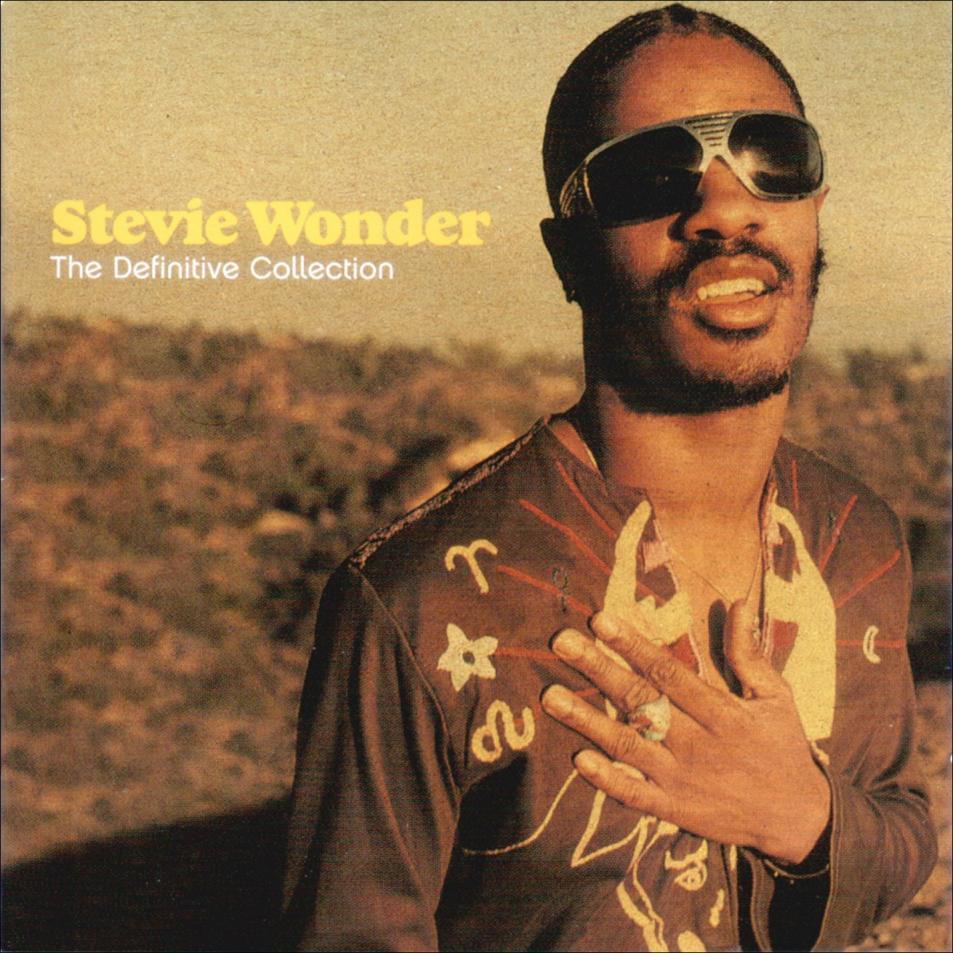
While performing for some friends in 1961, Wonder was discovered by Ronnie White of the Miracles. White quickly arranged an audition for Wonder at Motown records, where Berry Gordy signed the child prodigy on the spot. Gordy dubbed the child with the name Little Stevie Wonder and placed him in the care of producer/songwriter Clarence Paul. Stevies first two albums were released in 1962: A Tribute to Uncle Ray, which consisted of covers of Stevie's idol Ray Charles, and The Jazz Soul of Little Stevie, a jazz album showcasing his instrumental skills on piano, harmonica, and percussion. Neither of these albums, though they did show Stevie's prodigal talents, sold exceptionally well because they lacked clear musical direction. This all changed in 1963, however, with the release of the jovial live album The 12 Year Old Genius, featuring the single "Figertips, Pt. 2". This harmonica instrumental release shot to the top of both pop and R&B charts, making the album Motown's first chart-topping LP and establishing Wonder's commercial success.
Over the following year, Wonder produced a few more singles but all failed to reach the level of success that "Fingertips, Pt. 2" had. Wonder's voice began to change, compelling his label to place his career temporarily on hold. Stevie did not sit idly by, rather he took up studying classical piano at the Michigan School for the Blind. Wonder reemerged triumphant in 1965, dropping the "Little" portion of his name and releasing the dance oriented smash "Uptight (Everything's Alright)." The song was number one in R&B and reached the Top Five on the pop charts. Wonder co-wrote the song, causing the public to view him as a more mature vocalist, and this led to the similar success of his next release "Nothing's Too Good for My Baby." These singles initiated a run of US Top 40 smashes that continued for over six years.
Over the following year, Wonder produced a few more singles but all failed to reach the level of success that "Fingertips, Pt. 2" had. Wonder's voice began to change, compelling his label to place his career temporarily on hold. Stevie did not sit idly by, rather he took up studying classical piano at the Michigan School for the Blind. Wonder reemerged triumphant in 1965, dropping the "Little" portion of his name and releasing the dance oriented smash "Uptight (Everything's Alright)." The song was number one in R&B and reached the Top Five on the pop charts. Wonder co-wrote the song, causing the public to view him as a more mature vocalist, and this led to the similar success of his next release "Nothing's Too Good for My Baby." These singles initiated a run of US Top 40 smashes that continued for over six years.
During this early part of Stevie's career, Motown marketed the young prodigy as they did any other star-selecting Wonder's material and compiling albums which blended traditional soul compositions with
 sounds meeting current pop criterion. With minimal control over what he was allowed to produce, Wonder

still managed to give the world an early glimpse of his humanitarian principles. He released a hit cover of Bob Dylan's "Blowin' in the Wind" and Ron Miller's "A Place in the Sun" in 1966. By this time, Wonder began to demand more control over his career. He co-wrote his next several hits, including "Hey Love," "I Was Made to Love Her" (number one in R&B and number two in pop), and "For Once in My Life" (number two pop and R&B). For Wonder's album For Once in My Life (1968) he co-wrote over half of the material and co-produced several tracks for the first time. His success commercially continued with three chart-toppers from this album, "Shoo-Be-Doo-Be-Doo-Da-Day," "You Met Your Match," and "I Don't Know Why." In 1969 he released a song he actually recorded three year previously, "My Cherie Amour," to much success and later the Top Ten "Yesterday Me, Yester-You, Yesterday." For the album Singed, Sealed, & Delivered Wonder received co-production credit for the first time. The single "Signed, Sealed, Delivered, I'm Yours," was co-written by Wonder and singer Syreeta Wright, whom he married later that year. The marriage between Wonder and Wright lasted only 18 months, but the two continued to collaborate on musical endeavors. Wonder found continued success with the singles "Heaven Help Us All" and a rearrangement of the Beatles' "We Can Work It Out." Wonder also began to combine with other Motown artists on releases, including the Spinner's "It's a Shame" and the Miracles "Tears of a Clown," which became the groups' only number one pop song.
 Talking Book, released in 1972, showcased Wonder's artistic advances and met with tremendous commercial success. The album became on of the strongest R&B works to ever be released, perfecting Wonder's song craft as well as his use of futuristic electronic sounds. The funk classic "Superstition" (praised for featuring one of the most distinctive examples of the sound of the clavinet) and the mellow ballad "You Are the Sunshine of My Life" went on to win three Grammy's between them. Wonder amazingly pushed his success even further with the 1973 release of Innervisions; a socially aware concept album about state of contemporary society. From this, the singles "Living for the City" and "Higher Ground" became hits, and Innervisions received a Grammy for Album of the Year. Later that year, Wonder narrowly escaped death when a large timber fell on his car while en route to a concert in North Carolina. He suffered serious head injuries and lapsed into a coma, but thankfully recovered in a relatively short amount of time. The accident and his near brush with death had considerable impact on Wonder's next few releases, as they incorporated the awareness of mortality and a renewed focus on spirituality. Fulfillingness' First Finale (1974) was overall more somber, but featured the upbeat hit "Boogie On, Reggae Woman" and the scathing Richard Nixon critique "You Haven't Done Nothin." Wonder won his second straight Album of the Year Grammy. During this time, Wonder had been involved as a producer on Syreeta's second album and upon its completion he retreated to his studio for two years to devout all his energy on creating what would be considered his magnum opus. Released in 1976, the double album Songs In The Keys of Life exceeded the expectations of any Wonder fan. It is considered by many to be Wonder's most ambitious and fulfilling work of all time. The album showed Wonder's talent in a variety of musical forms and a range of instruments, as well as thrilling audiences with a cheery tribute to Duke Ellington and praising powerful black figures in "Black Man." If there were still people questioning Wonder's musical abilities, this album secured him as one of the most admired musicians in the field of contemporary music.
 For three years following the release of his magnum opus, Wonder released no new recordings. Instead, he directed his energy to creating the soundtrack music to the documentary film The Secret Life of Plants. This double album was released in 1979 (though the documentary never reached the public) to minimal success. The mostly instrumental album managed to make the Top Ten list but most speculated this was due to Wonder's previous record alone. Eager to stay on top, Wonder released the pop album Hotter Than July in 1980. The reggae infused "Masterblaster (Jamming)" shot Wonder back to the top of the charts, as did "Happy Birthday," a tribute song to Martin Luther King Jr. which was apart of Wonder's campaign eventually successful to make this black leader's birthday a national holiday. The Hotter Than July LP was Wonder's first to go platinum thanks to enormous fan support.
When working on a follow up album in 1981, Wonder was hindered by delays. He sought outside projects, and in 1982 completed a racial harmony duet with Paul McCartney entitled "Ebony and Ivory." The duet hit number one, and Wonder additionally released his greatest hits set Original Musiquarium I. From this, the new singles "That Girl," and the jazzy "Do I Do" were both noteworthy chart-toppers. Next, still unable to finish his follow up to Hotter Than July, Wonder took on the project of creating a soundtrack for the Gene Wilder comedy The Woman in Red. The well-known song "I Just Called to Say I Love You" had audiences enthralled, and it soon became the best selling single ever and went on to win an Oscar for the Best Song. Though the public adored the hit, critics disregarded it as unsophisticated and sentimental.
Finally, in 1985 the album Wonder began 5 years ago was released. In Square Circle went platinum and consisted of several strong songs, most notably "Part Time Lover." On the humanitarian front, Wonder performed on the number one charity singles "We Are the World" by USA for Africa and "That's What Friends Are For" by Dionne Warwick and Friends. In 1986 President Reagan granted the request of Wonder and his fellow campaigners to have Martin Luther King Jr.'s birthday celebrated as a national holiday. The first Martin Luther King Day was celebrated on January 15, 1986 with a concert headlined by Wonder. It was a triumphant day for this outspoken campaigner of black rights.
In 1987 Wonder returned with the release of Characters, which was to be his final release of the '80's. This album, best known for the single "Skeletons," was a hit on the R&B charts, but slid on the pop side. In 1989 Wonder was inducted into the Rock 'n' Roll Hall of Fame-- a tribute to Wonder's tremendous influence on contemporary music. Following two years of silence, Wonder emerged in 1991 with the soundtrack to Jungle Fever, a Spike Lee film. His next full album, Conversation in Peace (1995) failed to ignite the public but did win two Grammies for the single "For Your Love." Coolio helped to revive Wonder's notoriety by putting a rap spin on Wonder's "Pastime Paradise," which he called "Gangsta's Paradise." Temporarily back in the limelight, Wonder created a duet with Babyface, "How Come, How Long" (1996) that became a hit. Since then, Motown has continued to release Stevie Wonder's work, repackaged in a variety of ways and recompiled endlessly, in order to showcase his legacy. Stevie Wonder is viewed today as a living legend; a man who continues to influence contemporary artists through his unique jazz soul, talent in a wide variety of musical genres, and willingness to defy set standards to convey a deeper social message." Article source: www.stevie-wonder.net.
In 1971, Wonder's contract with Motown expired as he turned 21. He was also given access to the royalties set aside in his trust fund. Rather than immediately renewing his Motown contract, Wonder, who for some time now had fought with the label for more control over what he produced, set out on his own. Wonder financed and recorded two albums of exclusively his own material, giving him the ability to experiment with varying and more ambitious musical forms for the fist time. For Where I'm Coming From, Wonder forged the use of the synthesizer in black music, and also broadened his lyrical concerns to incorporate racial issues and spiritual concerns. Though the album produced only the Top Ten hit "If You Really Love Me," it was critical in proving to Motown that Wonder was no longer content to produce albums of hit singles and filler-he wanted his work to be an artistic statement. Using the money from his trust fund, Wonder built his own recording studio and enrolled in music theory classes. He worked with Motown to negotiate an entirely new recording deal, in which he received much higher royalty rates and established his own music production company, Black Bull Music. This allowed Wonder to retain the rights to his music and gave him full artistic control over his music. Under this new music deal, Wonder first released Music of My Mind, which he produced and wrote entirely on his own. This album showed the industry the new Wonder, an artist of original talent willing to push the boundaries of contemporary R&B music.


When working on a follow up album in 1981, Wonder was hindered by delays. He sought outside projects, and in 1982 completed a racial harmony duet with Paul McCartney entitled "Ebony and Ivory." The duet hit number one, and Wonder additionally released his greatest hits set Original Musiquarium I. From this, the new singles "That Girl," and the jazzy "Do I Do" were both noteworthy chart-toppers. Next, still unable to finish his follow up to Hotter Than July, Wonder took on the project of creating a soundtrack for the Gene Wilder comedy The Woman in Red. The well-known song "I Just Called to Say I Love You" had audiences enthralled, and it soon became the best selling single ever and went on to win an Oscar for the Best Song. Though the public adored the hit, critics disregarded it as unsophisticated and sentimental.
Finally, in 1985 the album Wonder began 5 years ago was released. In Square Circle went platinum and consisted of several strong songs, most notably "Part Time Lover." On the humanitarian front, Wonder performed on the number one charity singles "We Are the World" by USA for Africa and "That's What Friends Are For" by Dionne Warwick and Friends. In 1986 President Reagan granted the request of Wonder and his fellow campaigners to have Martin Luther King Jr.'s birthday celebrated as a national holiday. The first Martin Luther King Day was celebrated on January 15, 1986 with a concert headlined by Wonder. It was a triumphant day for this outspoken campaigner of black rights.
In 1987 Wonder returned with the release of Characters, which was to be his final release of the '80's. This album, best known for the single "Skeletons," was a hit on the R&B charts, but slid on the pop side. In 1989 Wonder was inducted into the Rock 'n' Roll Hall of Fame-- a tribute to Wonder's tremendous influence on contemporary music. Following two years of silence, Wonder emerged in 1991 with the soundtrack to Jungle Fever, a Spike Lee film. His next full album, Conversation in Peace (1995) failed to ignite the public but did win two Grammies for the single "For Your Love." Coolio helped to revive Wonder's notoriety by putting a rap spin on Wonder's "Pastime Paradise," which he called "Gangsta's Paradise." Temporarily back in the limelight, Wonder created a duet with Babyface, "How Come, How Long" (1996) that became a hit. Since then, Motown has continued to release Stevie Wonder's work, repackaged in a variety of ways and recompiled endlessly, in order to showcase his legacy. Stevie Wonder is viewed today as a living legend; a man who continues to influence contemporary artists through his unique jazz soul, talent in a wide variety of musical genres, and willingness to defy set standards to convey a deeper social message." Article source: www.stevie-wonder.net.
Friday, June 11, 2010
Tony Ray & Nicolle - Sound Of Summer (Extended Mix)
9 easy guides to making music on your PC
If you've ever wondered about making music on your computer, look no further. Whether you want to learn more about the basics, find out about virtual instruments or create the perfect intro, here's a guide to help you.
6. Get to grips with audio interfaces
Given that most modern computers have onboard audio capabilities, you'd be forgiven for thinking that you don't need an audio interface – but if you make music, you do.
7. Create a great song arrangement
When you're making music, the arranging process is just as important as the compositional one. Get it right and you could have a hit song on your hands – get it wrong and you'll be left with a jumbled mess of ideas.
8. How to promote your music online
If you want your music to reach the wider listening world, the internet can be your best friend. However, if you're going to have a presence online, you need to make sure that you do things right.
9. Ways to start a track
Every songwriting journey begins with a first step, but taking that first step isn't always easy. In fact, many people find that starting a track is the most difficult part of the creative process." Article source: www.techradar.com.

Sunday, June 6, 2010
AlexUnder Base & Lys - Drums (Extended Mix)
"Alexandru Enache, better known by his stage name AlexUnder Base, is a very talented romanian DJ born in Constanta, in 1984.As a new comer he started from scratch in a small club, Club Five in 2002, but it didn’t take too long until he made himselfknow and got invited to mix in one of the most popular clubs at that time, “Club Primo”. For a while he was a resident DJ in Primo,mixing mostly house music. Shortly after that a new club opened, Club Oxford in 2003, and he moved a step higher, he started touplift and perfect his skills. The mixes are based on electro-house but his knowledge made possible a fusion between different styles,combining it with electro-funk, groove, minimal and tech. In 2006, AlexUnder Base, invested his income in perfecting the mixingplatform with some top of the line DJ equipment.
Little by little he got invited to mix on some Radio Live shows, he got himselfknown in clubs around the country by mixing in the major cities in Romania. In 2008, the deep house music style made a blast and AlexUnder Base got on the sound wave and started his offensive against house minimal, but his journey didn’t stopped here, he startedworking on his own tracks featuring various artists: AlexUnder Base Feat. Frissco - Privacy [ROTON Music] AlexUnder Base Feat. MiReLa - Feelings [ROTON Music] AlexUnder Base - 'What The Fuck It Is [Original Mix] Lucian BARBULESCU & AlexUnder Base - 'Keeps Me Stronger'[Original Mix] AlexUnder Base - 'Storm' [original Mix] CASSIUS - The Sound Of Violence [AlexUnder Base Remix] CDR Alexunder Base is a DJ full of surprises and craziness for you party animals out there, stay tuned and you’ll enjoy your time!" Article source: AlexUnder Base on MySpace.

Subscribe to:
Posts (Atom)