Check out our other blogs too: VIBE69 Music & E-Flash Games

Tuesday, August 17, 2010

Arash &Rebecca - Suddenly (Havana Payami Remix)

Analogue vs. Digital Mixers

"In today’s increasingly digital world, where ‘digital’ denotes the latest and best of technology, there is a struggle in the sound industry between the analogue mixers of yesterday, and the digital mixers of tomorrow. This struggle poses many misunderstandings and debates between both experienced operators as well as inexperienced. The goal of this article is to attempt to bring a little understanding behind what we believe, and how we make our recommendations to churches.
In order to really dig into the meat of this topic, it is essential to begin by understanding the difference between ‘digital’ and ‘analog’ when it comes to your sound system. In a world consumed by high definition and the digital requirements of achieving that end, people are becoming quick to dismiss the idea of analogue without truly understanding the differences between the two. Also, these terms can carry with them a large variety of meanings among different areas of technology, which only helps to confuse the situation even more. Thus, the need to define these terms and how they apply in a church sound system becomes very important for this discussion. When it comes to a mixing console, the terms “digital” and “analog” refer to the types of signal that run through, and are manipulated by, the console itself. To better understand how this works, this article will now break down an example of how each signal would function typically.

Analogue

It all begins with a simple input, in this example we’ll use a wired microphone. When someone speaks into a microphone, a signal actually leaves his or her mouth in the form of air pressure. As this pressure passes into the microphone, the signal is converted into an electrical signal, which is referred to as an “analog” signal. This 
electrical signal then travels through wires and into an input jack on the mixing console. Historically, the only way to manipulate these signals was with the use of an analogue mixing console. These mixers take the electrical signals in their original form and, using certain electronics, they boost, decrease, join, and manipulate them until they reach the desired sound. From there the signal outputs to a variety of possible devices for further alteration (i.e. an equalizer or a compressor), and is then boosted by an amplifier before continuing. The signal then travels from the amplifier through a wire to a speaker, where the electrical signal is then converted back into air pressure (a.k.a. the voice of the person who spoke into the microphone initially). All of this takes place literally at the speed of light, having no delay between what goes into the microphone and what comes out of the speakers. 

Digital

For the most part, no true professional microphone manufacturer is currently making any digital microphones; therefore, as we continue with this example, we will discuss the typical setup, which would use a wired handheld analogue microphone. The process begins in the same way as the analogue example – somebody speaks into the microphone, and his or her voice is converted into an analogue signal. Once the analogue signal reaches the mixer, it is then converted again into a digital signal. This signal is basically a language that is called binary; it is a language that computers use in their processing and functioning. This signal allows for a completely different interface than that of an analogue signal, as software is used to manipulate it as opposed to individual knobs and faders. In order to maintain a familiar interface for operators, digital consoles still have faders and knobs; however, don’t be confused, as a digital signal no longer needs any of those to manipulate it. For example, you could simply use a computer screen with images of a mixer board and just click and drag your settings to whatever you want. The digital signal is manipulated to whatever output is desired, and is then output in either digital form, or more commonly is re-converted back into analogue at that point. The signal
will be re-converted whether your mixer does so with the signal now, or an amplifier does so before sending it off to the speakers. An analogue signal is required as the ultimate output from the speakers, as our ears hear only in analog. One important difference to also note is that while analogue travels without delay, there is an unavoidable amount of latency involved with digital mixers. This latency (delay) is caused by the conversion processes between digital and analog, and can be measured typically in a matter of milliseconds. The less expensive the mixer or the greater the functions being used, the higher the latency tends to be; however, for the most part this doesn’t typically pose a big issue with your live sound. It does have the potential to cause issues for singers using in-ear monitors - who could possibly experience a disorienting delay between the natural sound of their voices, and the delayed version that comes through the headset.
What does it mean?

A digital console opens up a new world of options for working with your inputs and outputs. Due to the fact that it is software driven, the user is really at the helm for deciding how they want to interface with everything. Most digital mixers are designed to look and have the ability to function much like an analogue mixer; they have faders, channel strips, and many similar layout features; the difference however, is that all of those items are programmable, and can be set to control whatever you want them to control. A digital console allows you to program everything, including levels, and save them for recalling at a later time; also, they allow for a massive number of inputs to be connected, though you are limited as to how many you can quickly control once you’ve exceed the number of channel strips available.
On the analogue console, you simply have a fixed set of inputs, which have their fixed knobs and faders, which accomplish their fixed set of functions. The only ‘save’ function an analogue console has, is what is left the same from the previous Sunday or practice, or a sketch made of knob positions and fader levels.
There are certainly many other highlights and features to both types of mixers, but for simplicities sake and what this article is intended for, I’ve only mentioned some of the major differences.

So wich do we choose?

Digital consoles are more expensive, more time consuming and difficult to learn/master/teach, and carry with them an inherent potential to crash. That being said, they also allow for a massive amount of inputs, an incredible level of interfacing and control, a cleaner signal, and the ability to program settings for different purposes, save them, and recall them whenever you need them.
Analogue consoles on the other hand, are dirt cheap in comparison, much simpler to learn/master/teach, and will only crash if the power goes out. Due to their inexpensive nature compared to digital consoles, you are also able to purchase top-of-the-line analogs, fully loaded with remarkable features, for the same price as a bottom-of-the-line, entry-level digital console with basic features. The cons remain basic: analogue boards are unable to save their settings to be, and they will always emit some miniscule amount of electronic noise that will be heard through the speakers (though all sound professionals will agree that this amount is typically a non-issue, and more noise tends to be emitted from the other electronic equipment used, like the amplifier for example).
Although a wonderful ideal for user interfacing and audio organizing, digital consoles are simply not cost effective. A well-manufactured professional digital mixer, loaded with the necessary features, is just far too expensive. Due to this fact alone, a digital mixer should often be considered a last resort, and only if there is enough in the budget to pay the massive premium for a top-of-line console. There are exceptions to this rule though, as these mixers are greatly suited for large churches with huge worship teams and productions on Sundays, as well as throughout the week. In those venues, the cost factor becomes insignificant due to the fact that the benefits of a digital console become overwhelming. Those venues have a need for a massive number of inputs, and the ability to interact with them on a much more complex level; this is not the case with the remaining vast majority of churches. In almost every situation, an analogue mixer remains the best choice of consoles for a churches needs. They’re straightforward, cheaper with far greater quality and features versus a digital console of the same price, and are much easier to teach others how to use - which in a church environment is an absolute necessity for the majority of those able to help with sound teams.

One day, when digital consoles are able to offer the same features, and high-quality, for close to the same prices as their analogue counterparts, they will undoubtedly find a valued place in churches; however, that time has not yet come, and for now an analogue mixer remains the most value for the your money, and for their ease of use." Article source: www.alectrosystems.com.

Sunday, August 15, 2010

Travie McCoy & Bruno Mars - Billionaire (DJ Dark Intensity Remix)

"Travie McCoy was born on August 5, 1981 in Geneva, New York by the name Travis Lazarus McCoy. He met Matt McGinley when he was in high school. The two bonded over their love of music and played in a band until Gym Class Heroes were officially formed in 2001.
With the band, he had productive years, dropping one album after another and touring in United States and across the pond. During his 2008 Warped Tours, he was arrested and charged with third-degree assault for allegedly hitting a concertgoers in the head with his microphone. After released on bail, he was quick to issue a public apology for what happened.
Travie met Katy Perry for the very first time when she recorded a song in a studio in New York and dated her soon afterwards. They played a couple in Gym Class Heroes' "Cupid's Chokehold" music video. After having a casual dating for several years, he took his romance with her to the next level by giving her a promise ring in 2008. Several months after handing the promise ring, Travie broke up with her. They rekindled their romance in April 2009 only to go their separate ways again few months later. Following his split from her, Travis worked on a mixtape titled "Forgetting Katy Perry". 
Judging from the title, it was speculated that Travie might take aim at his ex which had moved on to "Forgetting Sarah Marshall" star Russell Brand. But, the rumor was denied as he said, "It's in no way airing out my dirty laundry or in any way a personal shot to her. If anything, it's making fun of myself."
Prior to the mixtape release, Travie teamed up with MTV and dropped a charity single called "One at a Time" which benefited global HIV/AIDS prevention projects. He traveled to South Africa, Philippines and India as a spokesperson for MTV's Staying Alive Foundation and shared his experience in the music video for the song.
 Travie dropped a debut album "Lazarus" on June 8, 2010. Bruno Mars, Cee-Lo, T-Pain and Young Cash were lined up as featured guests with Bruno lending his vocal on the lead single "Billionaire" which peaked at No. 5 on Billboard Hot 100. "It's me talking about what would happen if I would somehow manage to become a billionaire. What would I do with the money?" he said of the single." Article source: www.aceshowbiz,com.

Sistem & Emma - People Are People

Sistem, the band that represented Romania in the Eurovision Song Contest 2005 in Kiev released their new song and video clip People are people

"Sistem, one of the most famous Romanian bands have recently released their new song and video clip. The song is titled People are people and it is actually a remake of the original Depeche mode song. The remake of this huge Depeche mode hit, has given Sistem the opportunity to spread their message of tollerance, no matter the color, religion or music taste: We should all get along. The song is featuring  a new Romanian female artist , Emma, which is doing very well on this project, hoping to hear more of her in the near future." Article source: www.esctoday.com.

Morris - Havana Lover (Emil Lassaria Remix)

The Way Music Therapy Promotes Health

"Research has shown that music has a profound effect on your body and psyche. In fact, there’s a growing field of health care known as Music Therapy, which uses music to heal. Those who practice music therapy are finding a benefit in using music to help cancer patients, children with ADD, and others, and even hospitals are beginning to use music and music therapy to help with pain management, to help ward off depression, to promote movement, to calm patients, to ease muscle tension, and for many other benefits that music and music therapy can bring. This is not surprising, as music affects the body and mind in many powerful ways. The following are some of effects of music, which help to explain the effectiveness of music therapy:
Brain Waves: Research has shown that music with a strong beat can stimulate brainwaves to resonate in sync with the beat, with faster beats bringing sharper concentration and more alert thinking, and a slower tempo promoting a calm, meditative state. Also, research has found that the change in brainwave activity levels that music can bring can also enable the brain to shift speeds more easily on its own as needed, which means that music can bring lasting benefits to your state of mind, even after you’ve stopped listening.

Breathing and Heart Rate: With alterations in brainwaves comes changes in other bodily functions. Those governed by the autonomic nervous system, such as breathing and heart rate can also be altered by the changes music can bring. This can mean slower breathing, slower heart rate, and an activation of the relaxation response, among other things. This is why music and music therapy can help counteract or prevent the damaging effects of chronic stress, greatly promoting not only relaxation, but health.
State of Mind: Music can also be used to bring a more positive state of mind, helping to keep depression and anxiety at bay. This can help prevent the stress response from wreaking havoc on the body, and can help keep creativity and optimism levels higher, bringing many other benefits.

Other Benefits: Music has also been found to bring many other benefits, such as lowering blood pressure (which can also reduce the risk of stroke and other health problems over time), boost immunity, ease muscle tension, and more. With so many benefits and such profound physical effects, it’s no surprise that so many are seeing music as an important tool to help the body in staying (or becoming) healthy.

Using Music Therapy: With all these benefits that music can carry, it's no surprise that music therapy is growing in popularity. For more information on music therapy, visit the American Music Therapy Association's website.

Using Music On Your Own: While music therapy is an important discipline, you can also achieve benefits from music on your own. This article on music, relaxation and stress management can explain more of how music can be an especially effective tool for stress management, and can be used in dailly life." Article source: www.stress.about.com.

Saturday, August 14, 2010

Mike Foyle - Pandora (Blizzard Remix)

The History of MIDI

"The creation of MIDI in 1983 is closely tied to the development of music synthesizers, but it has spawned whole industries of interactivity far beyond the dreams of 1983.

Music Synthesizers: In the beginning
 
Electronic musical instruments had been around in some form since the late nineteenth century. The Telharmonium and the Singing Telegraph date back to the beginnings of electricity itself while throughout the first half of the twentieth century electronic musical contraptions were quite the rage in Europe , from the French Ondes-Martenot to the German Pianorad, to the Russian Theremin .
The word ‘Synthesizer' didn't arrive on the scene until the 1950s with the RCA Synthesizer I and II, but it wasn't long before these room-sized pieces of engineering had been, themselves, ‘synthesized' down into more acceptable components and indeed ‘modules' thanks to the pioneering work of visionaries like Dr Robert Moog, Don Buchla, Haorld Bode, Pete Zinovieff, and Dave Cockerell.
Moog is generally, and appropriately, credited for taking the synthesizer out of the university laboratory and putting it in the hands of musicians. Certainly from the time of Walter Carlos' ground-breaking Switched On Bach recording (1968) to the release of the MiniMoog (1970) both musicians and the music-buying public became enamored – if not frankly dazzled – by the sonic possibilities now seemingly on the musical horizon.
As it turned out it was a false dawn. The synthesizers of the 1970s might have been unrestricted sonically but in terms of playability, stability, polyphony, and compatibility they were still very limited indeed.
Early integrated circuits-based synthesizers from Moog, ARP, and EMS opened the door but it was the arrival of Japanese companies like Korg, Roland, and Yamaha in the mid 1970s that converted potential into popularity.
 
Digitally Controlled Synthesizers

The popularity of synthesizers got a major boost in 1978 when micoprocessor-based instruments began to appear, spearheaded by a new California company Sequential Circuits. The Prophet-5, though still hugely limited by today's standards, offered reasonable levels of playability, stability, and polyphony, albeit at a hefty price at the time (around $4000). Soon Korg, Roland, and Yamaha's microprocessor-based offerings would slash prices in half, and by the turn of the decade the polyphonic synthesizer was firmly on the map for every self-respecting keyboard player from hobbyists to touring professionals. The days of the Hammond organ, the Fender Rhodes piano, and latterly the Hohner Clavinet were coming to an end.
Stability, playability, and polyphony continued to evolve in the early 1980s but compatibility remained a thorn in the side of manufacturers. The multifarious nature of synthesizer design meant that each manufacturer had been defining pitch and timing (Control Voltage and Gate) data in their own way. Once polyphonic, digital technology became available manufacturers they began to design unique digital interfaces that would, at the very least, allow you to connected several Korg, or Roland, or Yamaha synths together. Roland developed its DCB (Digital Communication Bus), Yamaha its Key Code Interface etc etc.
Visionaries like Dave Smith from Sequential Circuits, and Ikutaru Kakehashi from Roland began to worry that this lack of compatibility between manufacturers would restrict people's use of synthesizers, which would ultimately inhibit sales growth. Talk of a ‘universal' digital communication system thus began circulating in 1981. Dave Smith and Chet Wood presented a paper that year at AES proposing a concept for a Universal Synthesizer Interface running at 19.2 kBaud, using regular 1/4" phone jacks. At the following NAMM show in January 1982 a meeting took place between the leading American and Japanese synthesizer manufacturers where certain improvements were made to the specification: increasing the Baud rate to 31.25 and adding the opto-isolation circuit.

MIDI is Born

MIDI (an acronym for "musical instrument digital interface) as its name was ultimately chosen, was first announced to the public in 1982, and by as early as January 1983 actually appeared on an instrument; the Sequential Prophet-600. Roland's JX3P followed hot on its heels, was ‘connected' successfully, and a new chapter in the history of electronic musical instruments was born.
In 1983, the MIDI Specification was only about 8 pages long and defined only the most basic instructions one might want to send between two synthesizers -- things like how to play notes and how to control the output volume, etc. Very quickly, the arrival of this ‘common (digital) language' created demand for new MIDI messages that enabled greater control of synthesizers but also for control of other recording gear and even stage lighting. MIDI also enabled computers to be applied to the music-making process. Although the way that MIDI works has not changed since 1983 (also almost preposterously inconceivable), the MIDI protocol has grown to encompass such additional concepts as: standardized MIDI song files ( General MIDI , 1991); new connection mechanisms such as USB, FireWire, and wi-fi; new markets such as mobile phones and video games; and a whole world of ‘alternative' and ‘performance' based MIDI products.
The agreement to adopt a standard (and royalty-free) technology was an incredible achievement in itself – and substantially unmatched to this day – but it was also remarkable for what it then enabled. Sequencers, sampling, digital drum machines, dedicated computer control, ultimately a complete revolution within the recording industry… it is hard to imagine that any of these technologies or developments would have occurred, or certainly have been as wide-reaching, without the glue of MIDI." Article source: www.midi.org

Andreea Banica - Love In Brasil

"Name: Andreea Banica Mitrea
Birth place: Eforie Sud, Constanta, Romania
Birth date: June 21, 1978
Parents: Both dead, mother Maria Banica
Brothers/ Sisters: One sister, Ramona Banica Slave
Eye color: Blue
Hair color: Blonde
Height: 1.70m
Nationality: Romanian
Ethnicity: White
Other names: Blondy
Spouse: Lucian Mitrea
Children: One daughter, Sofia Maria Mitrea (b. May 7, 2009)
Occupation: singer, dancer
Years active: 1998-present
Studies: 2 years of piano and lessons at the Art School and 4 years of canto lessons at the same school


Biography and Career :

Andreea Banica was born on June 21, 1978 in Eforie Sud, Constanta - Romania. She is a Romanian singer and model. Andreea Banica Height : 5'5''/170 cm.
Andreea Banica took 2 years of piano and lessons at the Art School and 4 years of canto lessons at the sameschool. She started her musical career when she was 4 years old.
Andreea Banica started her solo career with her band named "Exotic".
Her sensual voice, blonde hair, blue eyes and her beautiful body made her famous from her first apparition on the music market.
Andreea Banica's pics have been included in a lot of Romanian Magazines. She also received a proposal from Playboy and she accepted it.
Andreea is a very sincere and loyal person. She and her friend Cristina Rus joined toghether forming "Blondy" band on February 1, 2001 and their album "Atat de aproape (So Close - English Title)" contained 11 songs. The album was launched on May 21, 2001 and the opening party was in ClubMaxx- Bucharest.
This album style was pop-dance but had latino and r&b influences. Many of the songs were composed by Laurentiu Duta. The song "Numele Tau (Your Name - English Version)" was a hit all over Romania and it even had a videoclip. Andreea Banica's pictures got on the cover on the Romanian Magazines and she is one of the sexiest Romanian women.
Why is Andreea Banica famous?

Andreea Banica is a very famous singer and dancer in Romania. She is one of the richest singers from Romania. Andreea is not known just in Romania, she had a real success in other counties too with her hits and video. Andreea is the artist who gives to her fans all that they need with her songs. Also, Andreea became famous from magazines too because she was all the time the subject of rumors from media.

Why do we like Andreea Banica?

We like Andreea Banica because she is a beautiful Romanian woman, singer and dancer. She is loved by all the people from the entire country and appreciated by the Romanian critics. Andreea represent the symbol of the dance music in Romania." Article source: www.celebrityonlines.com.

Friday, August 13, 2010

QPido Level - The Pitzi Song

Top 13 Fashion Mistakes

"When it comes to fashion and trends, we all want the same thing: to look great! Unfortunately, there are some fashion errors that we might not be aware of, but that we might practice. These fashion faux pas are visible, and can completely ruin a perfectly good outfit. Here I’ve listed the top 13 fashion mistakes that women often make.
1. Wearing oversized clothing.
Now there is the wrong oversized clothing and the right over-sized clothing. The right over-sized clothing is some of this spring’s top trends such as the bubble skirt, which looks fabulous paired with a tighter fitting top and a high waist belt. Wrong over-sized clothing is just plain wrong: huge knee-reaching t-shirts, baggy pants, you get the point. Make sure you buy clothes that fit you properly.
2. Wearing red and green at the same time.
Honestly, you will look like a Christmas tree. Red and green are two of the colors that you absolutely must avoid wearing together. These colors completely clash, so just stay clear. Also, it’s best to stay away from green and red makeup. If you decide to go for a green eyeshadow, don’t put on a bright red lipstick. Instead, opt for a clear gloss or a nude color.
3. Dirty shoes.
It would be bad enough if you had shoes that were out of style, or didn’t match with your outfit, but if you have dirty shoes, you’re making a big fashion faux pas. Make sure to keep your shoes in style, according to your outfit, and most importantly, clean!
4. Short skirt and short top.
If you’re going to wear a miniskirt, don’t wear a short top with it! It is one of the worst fashion mistakes you could make because you’ll end up looking trashy. Instead, wear a miniskirt and pair it with a tee that reaches your hip bones. Play it up with a wide belt. If you’re into short tops, just wear jeans and steer away from short skirts.
5. Bulky shoes with feminine dress.
Whenever I see this, I always have to ask myself: “what was she thinking?” A floral, feminine dress should never be paired with bulky shoes such as thick platforms. This kind of dress deserves a pair of soft, delicate shoes. Anything with a small heel, and even wedges and espadrilles.
6. Too much jewelry.
A pair of embellished earrings; a funky necklace; some bangles; a few rings; maybe a brooch. That is way too much jewelry for you, and for your outfit. So if you don’t want to look like an ornament, keep it simple! A thin, fine necklace and a pair of earrings is enough. Or if you decide for a pair of big, adorned earrings, keep it simple by wearing a few rings or a bracelet or two with that, but stay away from the necklace.Just know your limits.
7. Wearing fashion that doesn’t suit you.
If miniskirts are in, and you don’t have the greatest legs, that’s fine! You don’t have to abide by each and every single fashion trend that comes out. If something that suit your body type, it’s better to stay away from it. After all, most of us aren’t models and a lot of the fashion trends that spring up don’t suit everybody, so be careful what you choose.
8. More than one pattern.
If you have flowers on your shirt, don’t wear plaid pants, or the other way around. Try to stick with one pattern in your outfit. A pair of plaid pants with a solid colored top, or a floral shirt with a pair of jeans. Don’t crowd your outfit with patterns. Keep it sweet and simple.
9. Tights are not for everyone.
As I’ve mentioned before, not all fashion trends work for everyone. Some people should stay away from certain trends. Trends like tights for example. You know they stick to your skin and show off your legs, so if you don’t have shapely legs, don’t wear them please. I know they’re in, but if they make you look bad,avoid them I see so many women wearing tights with over-sized shirts,it absolutely amazes me. But try to avoid this very common mistake for your own good.
10. Panty lines.
Need I say more? If you’re going to wear thin, clingy, or even white pants, be aware of it and don’t walk out with embarrassing panty lines, but opt for a thong.
11. An orange tan.
Let’s face it: you know that it’s orange, you just don’t want to admit it. Stay away from cheap self-tanners because they will bring you nothing but trouble. Instead, shell out some money for a better product such as Estee Lauder sunless and make sure you always exfoliate before applying self-tanner.
12. Sneakers with everything.
Sure, we all want to be comfortable in our shoes, but it’s not vise to always wear sneakers with everything from skirts, to jeans, to capris. A lot of people like to wear sneakers with a jean skirt, and that’s completely fine, as long as you don’t do it all the time. It’s a comfy, sporty look, but you can make it classy and sexy. Instead, wear a pair of wedges or high heels. Don’t always pair your jeans with sneakers: it’s boring, and it’s tasteless. Spice up your outfit with a pair of hot stilettos.
13. Don’t indulge
That means don’t over do sparkles, sequins, or any festive looking articles of clothing. While it’s fun to play with different colors, fabrics, and styles, keep it simple is very important. Wearing too much of a good thing can turn into a fashion disaster. If you’re going to wear a top that has sequins on it, keep it simple everywhere else and don’t embellish your outfit even more." Article source: www.styletips101.com.

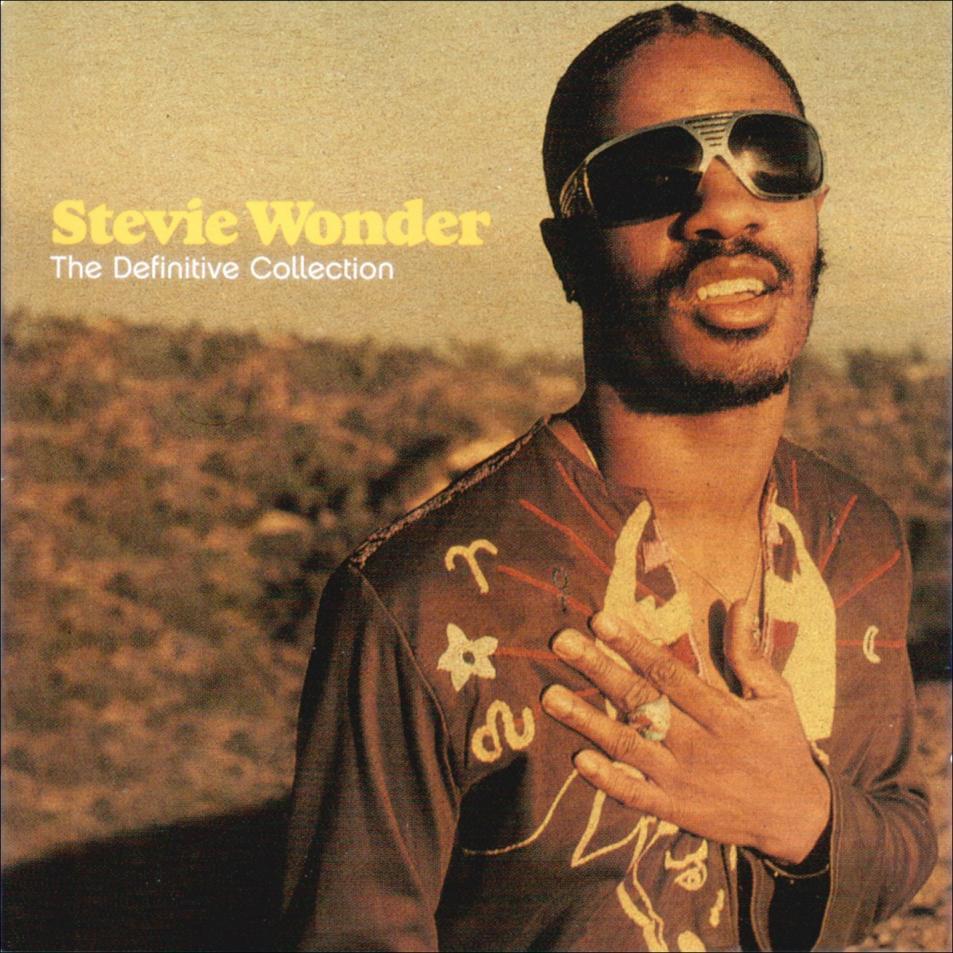
Stevie Wonder - I Just Called To Say I Love You (DJ Fisun Remix)

"Stevie Wonder was born Steveland Hardaway Judkins (later taking the name of Steveland Morris when his mother married) in Saginaw, Michigan on May 13, 1950. Born premature, baby Steveland was placed in an incubator for oxygen treatment. Sadly, he received too much oxygen, causing him to suffer from premature blindness. Though his family didn't know it then, it was actually his loss of sight that later provided Wonder with a heightened awareness of sounds, evident in his vibrant, colorful music. Even as a child, Wonder was never deterred by his handicap, beginning to learn the piano at the age of seven and mastering both the drums and the harmonica by the age of nine. In 1954, Wonder's family moved to Detroit where Steveland joined his church's choir. The already musically inclined child absorbed this gospel influence and increased even further his musical interest.
While performing for some friends in 1961, Wonder was discovered by Ronnie White of the Miracles. White quickly arranged an audition for Wonder at Motown records, where Berry Gordy signed the child prodigy on the spot. Gordy dubbed the child with the name Little Stevie Wonder and placed him in the care of producer/songwriter Clarence Paul. Stevies first two albums were released in 1962: A Tribute to Uncle Ray, which consisted of covers of Stevie's idol Ray Charles, and The Jazz Soul of Little Stevie, a jazz album showcasing his instrumental skills on piano, harmonica, and percussion. Neither of these albums, though they did show Stevie's prodigal talents, sold exceptionally well because they lacked clear musical direction. This all changed in 1963, however, with the release of the jovial live album The 12 Year Old Genius, featuring the single "Figertips, Pt. 2". This harmonica instrumental release shot to the top of both pop and R&B charts, making the album Motown's first chart-topping LP and establishing Wonder's commercial success.
Over the following year, Wonder produced a few more singles but all failed to reach the level of success that "Fingertips, Pt. 2" had. Wonder's voice began to change, compelling his label to place his career temporarily on hold. Stevie did not sit idly by, rather he took up studying classical piano at the Michigan School for the Blind. Wonder reemerged triumphant in 1965, dropping the "Little" portion of his name and releasing the dance oriented smash "Uptight (Everything's Alright)." The song was number one in R&B and reached the Top Five on the pop charts. Wonder co-wrote the song, causing the public to view him as a more mature vocalist, and this led to the similar success of his next release "Nothing's Too Good for My Baby." These singles initiated a run of US Top 40 smashes that continued for over six years.


During this early part of Stevie's career, Motown marketed the young prodigy as they did any other star-selecting Wonder's material and compiling albums which blended traditional soul compositions with
sounds meeting current pop criterion. With minimal control over what he was allowed to produce, Wonder 
still managed to give the world an early glimpse of his humanitarian principles. He released a hit cover of Bob Dylan's "Blowin' in the Wind" and Ron Miller's "A Place in the Sun" in 1966. By this time, Wonder began to demand more control over his career. He co-wrote his next several hits, including "Hey Love," "I Was Made to Love Her" (number one in R&B and number two in pop), and "For Once in My Life" (number two pop and R&B). For Wonder's album For Once in My Life (1968) he co-wrote over half of the material and co-produced several tracks for the first time. His success commercially continued with three chart-toppers from this album, "Shoo-Be-Doo-Be-Doo-Da-Day," "You Met Your Match," and "I Don't Know Why." In 1969 he released a song he actually recorded three year previously, "My Cherie Amour," to much success and later the Top Ten "Yesterday Me, Yester-You, Yesterday." For the album Singed, Sealed, & Delivered Wonder received co-production credit for the first time. The single "Signed, Sealed, Delivered, I'm Yours," was co-written by Wonder and singer Syreeta Wright, whom he married later that year. The marriage between Wonder and Wright lasted only 18 months, but the two continued to collaborate on musical endeavors. Wonder found continued success with the singles "Heaven Help Us All" and a rearrangement of the Beatles' "We Can Work It Out." Wonder also began to combine with other Motown artists on releases, including the Spinner's "It's a Shame" and the Miracles "Tears of a Clown," which became the groups' only number one pop song.
 In 1971, Wonder's contract with Motown expired as he turned 21. He was also given access to the royalties set aside in his trust fund. Rather than immediately renewing his Motown contract, Wonder, who for some time now had fought with the label for more control over what he produced, set out on his own. Wonder financed and recorded two albums of exclusively his own material, giving him the ability to experiment with varying and more ambitious musical forms for the fist time. For Where I'm Coming From, Wonder forged the use of the synthesizer in black music, and also broadened his lyrical concerns to incorporate racial issues and spiritual concerns. Though the album produced only the Top Ten hit "If You Really Love Me," it was critical in proving to Motown that Wonder was no longer content to produce albums of hit singles and filler-he wanted his work to be an artistic statement. Using the money from his trust fund, Wonder built his own recording studio and enrolled in music theory classes. He worked with Motown to negotiate an entirely new recording deal, in which he received much higher royalty rates and established his own music production company, Black Bull Music. This allowed Wonder to retain the rights to his music and gave him full artistic control over his music. Under this new music deal, Wonder first released Music of My Mind, which he produced and wrote entirely on his own. This album showed the industry the new Wonder, an artist of original talent willing to push the boundaries of contemporary R&B music.
Talking Book, released in 1972, showcased Wonder's artistic advances and met with tremendous commercial success. The album became on of the strongest R&B works to ever be released, perfecting Wonder's song craft as well as his use of futuristic electronic sounds. The funk classic "Superstition" (praised for featuring one of the most distinctive examples of the sound of the clavinet) and the mellow ballad "You Are the Sunshine of My Life" went on to win three Grammy's between them. Wonder amazingly pushed his success even further with the 1973 release of Innervisions; a socially aware concept album about state of contemporary society. From this, the singles "Living for the City" and "Higher Ground" became hits, and Innervisions received a Grammy for Album of the Year. Later that year, Wonder narrowly escaped death when a large timber fell on his car while en route to a concert in North Carolina. He suffered serious head injuries and lapsed into a coma, but thankfully recovered in a relatively short amount of time. The accident and his near brush with death had considerable impact on Wonder's next few releases, as they incorporated the awareness of mortality and a renewed focus on spirituality. Fulfillingness' First Finale (1974) was overall more somber, but featured the upbeat hit "Boogie On, Reggae Woman" and the scathing Richard Nixon critique "You Haven't Done Nothin." Wonder won his second straight Album of the Year Grammy. During this time, Wonder had been involved as a producer on Syreeta's second album and upon its completion he retreated to his studio for two years to devout all his energy on creating what would be considered his magnum opus. Released in 1976, the double album Songs In The Keys of Life exceeded the expectations of any Wonder fan. It is considered by many to be Wonder's most ambitious and fulfilling work of all time. The album showed Wonder's talent in a variety of musical forms and a range of instruments, as well as thrilling audiences with a cheery tribute to Duke Ellington and praising powerful black figures in "Black Man." If there were still people questioning Wonder's musical abilities, this album secured him as one of the most admired musicians in the field of contemporary music.
For three years following the release of his magnum opus, Wonder released no new recordings. Instead, he directed his energy to creating the soundtrack music to the documentary film The Secret Life of Plants. This double album was released in 1979 (though the documentary never reached the public) to minimal success. The mostly instrumental album managed to make the Top Ten list but most speculated this was due to Wonder's previous record alone. Eager to stay on top, Wonder released the pop album Hotter Than July in 1980. The reggae infused "Masterblaster (Jamming)" shot Wonder back to the top of the charts, as did "Happy Birthday," a tribute song to Martin Luther King Jr. which was apart of Wonder's campaign eventually successful to make this black leader's birthday a national holiday. The Hotter Than July LP was Wonder's first to go platinum thanks to enormous fan support.
When working on a follow up album in 1981, Wonder was hindered by delays. He sought outside projects, and in 1982 completed a racial harmony duet with Paul McCartney entitled "Ebony and Ivory." The duet hit number one, and Wonder additionally released his greatest hits set Original Musiquarium I. From this, the new singles "That Girl," and the jazzy "Do I Do" were both noteworthy chart-toppers. Next, still unable to finish his follow up to Hotter Than July, Wonder took on the project of creating a soundtrack for the Gene Wilder comedy The Woman in Red. The well-known song "I Just Called to Say I Love You" had audiences enthralled, and it soon became the best selling single ever and went on to win an Oscar for the Best Song. Though the public adored the hit, critics disregarded it as unsophisticated and sentimental.
Finally, in 1985 the album Wonder began 5 years ago was released. In Square Circle went platinum and consisted of several strong songs, most notably "Part Time Lover." On the humanitarian front, Wonder performed on the number one charity singles "We Are the World" by USA for Africa and "That's What Friends Are For" by Dionne Warwick and Friends. In 1986 President Reagan granted the request of Wonder and his fellow campaigners to have Martin Luther King Jr.'s birthday celebrated as a national holiday. The first Martin Luther King Day was celebrated on January 15, 1986 with a concert headlined by Wonder. It was a triumphant day for this outspoken campaigner of black rights.
In 1987 Wonder returned with the release of Characters, which was to be his final release of the '80's. This album, best known for the single "Skeletons," was a hit on the R&B charts, but slid on the pop side. In 1989 Wonder was inducted into the Rock 'n' Roll Hall of Fame-- a tribute to Wonder's tremendous influence on contemporary music. Following two years of silence, Wonder emerged in 1991 with the soundtrack to Jungle Fever, a Spike Lee film. His next full album, Conversation in Peace (1995) failed to ignite the public but did win two Grammies for the single "For Your Love." Coolio helped to revive Wonder's notoriety by putting a rap spin on Wonder's "Pastime Paradise," which he called "Gangsta's Paradise." Temporarily back in the limelight, Wonder created a duet with Babyface, "How Come, How Long" (1996) that became a hit. Since then, Motown has continued to release Stevie Wonder's work, repackaged in a variety of ways and recompiled endlessly, in order to showcase his legacy. Stevie Wonder is viewed today as a living legend; a man who continues to influence contemporary artists through his unique jazz soul, talent in a wide variety of musical genres, and willingness to defy set standards to convey a deeper social message." Article source: www.stevie-wonder.net.

Thursday, August 12, 2010

Depeche Mode - Only When I Lose Myself (Hytraxx Remix)

"Henry T is the name behind the HytraxX. Dj since 1996, Henry is one of the Icons of the electronic music in Brazil.
Perfect techniques, combined with a set list of very good taste, Henry played in the main Clubs and big parties with big Djs like Norman Cook (Fat Boy Slim), Dj Murphy, MemĂȘ and others...
On 1999 with one GrooveBox MC-505, an old Tape Deck Tascam and two decks, started his first steps into a long way of musical experiences, turning into a great musical producer. Henry has gone through various styles from the beginning of his career, today is part of other projects, one is the HYT, which is very success in the global scene of psytrance.

Now Henry decided to return to roots and created the HytraxX, an innovative project, where the aim is Fun! Music without discrimination, to Pump and Rock the floors of the dance world. Club-Tribal-Electro-Progressive-House, in the musical journey of his sounds, Henry walks By all these styles of subtle way, transferring to the sound all his good vibrations. Listen, walking, dance and have fun! This is HytraxX!" Article source: Hytraxx on MySpace.

Wednesday, August 11, 2010

Alex Dubbing & Amannda - Unique (Mauro Mozart Remix)

"Amannda is a Brazilian singer who was born with a gift, she has the music in her soul. After almost 9 years singing Brazilian popular music and black music, she decided that was time to change. She started to write songs and moved to Sao Paulo to try new paths. She ended up releasing her first song DONT MISS in one of the most famous night club in Brazil : The Week International. And that became one of her first dance hits. Since then, she performed at many important parties and events, such as Revolution, The Original Brazilian Pool Party and Sao Paulo’s famous Gay Pride and Spirit of London. In 2007, she made history when she became the first Brazilian singer to be 23rd at Billboard with the song Sound of your voice. It got into more than 5 record labels all around the world. 

Thanks to this international fame, she was invited to perform at Montreal’s Divers/CitĂ© Festival in August 2008. Since her performance in Canada, her tracks were “adopted” by many local djs who incorporated them in their sets. Amannda will be starting 2009 with an original performance for Masterbeat Records, in their New Year’s Eve Party in Los Angeles. And then she will perform for the first time in Mexico for two great parties: Kamabeat & Winter Party ( Nation Club) Amannda is successful in her careerer thanks to the unique passion she infuses in her own music...her own ideas....her own voice." Article source: Amannda on MySpace.
free counters
Music Top Blogs Top Academics blogsBlog Directory & Search engineOnline MarketingMusic blogs & blog posts BlogRankers.com

wibiya widget