Check out our other blogs too: VIBE69 Music & E-Flash Games

Wednesday, August 11, 2010

DJ Andi & Stella - Happiness (DJ Andi Rework)

How much power do we really need?

Audio amplifier power is a much debated issue and often a grossly misunderstood term; in particular, many relate the sound loudness they hear solely and directly to amplifier power, which is not exactly the case.
Determining the amount of amplifier power necessary to match your expected level of loudness or listening pattern, is critical for both an enjoyable listening experience in the home theater, as well as for the safety of your gear - speakers and amplifier alike.
The required amplifier power has to be seen in the light of both your home theater speakers and the room environment. All three are equally important and need to be taken into account when planning an audio set-up.
Understanding amplifier power

Definitely, a much debated issue among home theater enthusiasts is amplifier power. Yet few have a true understanding of how the power output delivered by an audio amplifier or AV receiver relates to the end loudness level you will hear in the home theater.
Many simply relate loudness with amplifier power but few realize that the sound they hear is not just a function of an amplifier output power and the audio source only, but also of the home theater speakers, and the room environment - room size and room decor; the latter impacts the absorption of sound energy.
In other words, while amplifier power is the driving force behind home theater speakers, the resultant sound you hear depends also on both speaker efficiency and your home theater room.
All three are equally important and we add crucial factors which need to be taken into account when planning a home theater audio set-up.
So the whole issue is: How much amplifier power do you need - taking into account speaker efficiency and room environment - to achieve a level of loudness that best matches your listening habits?
Amplifier Power

There is no simple and straight forward answer to amplifier power. This partly explains why audio amplifier power requirement is such a controversial topic.
Audio amplifier power basics
Before delving into how amplifier power, speaker efficiency and room environment influence the resultant sound quality and loudness, it is important to first have a better understanding of a few amplifier power basics.
A very basic concept here is that no matter how one specifies power, as long as all other things are equal, frequency range, load impedance, distortion, dynamic headroom, etc., having more amplifier power is better. It makes your system play louder, sounds better, and less likely to cause speaker failure.
The latter may be a surprise to many but in reality, speaker failure as a result of insufficient amplifier power is one of the primary failures associated with home theater speaker systems. Insufficient amplifier power leads an audio amplifier into clipping, thus generating harsh distortion well outside the speaker frequency response. Any electrical energy within the amplifier output signal falling outside the frequency range supported by a home theater speaker would not be converted into sound and ends up as heat. If this is sustained for a sufficient length of time, it may lead to speaker thermal failure.
This issue of clipping arises because it is impossible to reach a sufficient level of loudness with a small audio amplifier. In other words, with a small amplifier for your speakers and room size, you will not get the perception that the desired level of loudness is being attained. The tendency for many is to turn the amplifier volume towards the maximum, pushing the amplifier into clipping to compensate, thus endangering the speaker integrity due to excessive heat dissipation in the voice coil especially during loud passages during a movie playback or music listening.
If your system is not able to play as loud as you would like it to be without the signal becoming distorted, then you need a bigger, more powerful audio amplifier.
This does not mean that you should go out and get the biggest amplifier you can afford. The power rating of your amplifier should be related to your speakers. Inasmuch as insufficient amplifier power can hurt your speakers, too much amplifier power may also lead to both thermal failure as a result of excessive heat dissipation in the voice coil, and mechanical failure due to excessive diaphragm movement; the latter often leads to a shorted and even deformed voice coil due to possible rubbing along the coil housing and the coil hitting the magnetic pole bottom piece.
 
So... how much amplifier power do you need?

In general, audio amplifier power needs to be larger than the speaker's rated power because an amplifier is capable of delivering its rated power only when driven by a sinusoidal, or sine wave signal.
In a real life situation, the audio signal driving a speaker consists of a multitude of frequencies all playing at the same time rather than a pure single frequency sine wave signal; as a result, an amplifier will deliver less than its rated power.
As a general guideline, many professionals would advise to allow for a 30%, even 50% increase in amplifier power over the rated speaker's average, or 'RMS' power. Thus if your speakers are rated at 100W, the amplifier should be capable of delivering close to 150W when rated for a sine wave signal.But there is more to audio amplifier power than allowing for the fact that amplifier ratings are based using a sine wave signal - which in itself is a far cry from what you will be throwing at it.
In our introduction to this article, we indicated that the resultant sound loudness you hear depends not only the audio amplifier power output, but also on both speaker efficiency and the room size.
All three are equally important and we add crucial factors which need to be taken into account when planning a home theater audio set-up to ensure that the resultant sound loudness will match your desired volume level.
Sound Loudness
Sound levels are expressed in decibels SPL, or sound pressure level. One decibel represents the minimum perceptible change in volume by human hearing. Normal speaking stands at around 65 to 60dB while a concert climax may reach 105 dB.
In the home theater, the THX reference level for loudness is 85dB for each of the audio channels except for the LFE which is set 10dB louder as measured at your seating position.
Additionally, if you are after a reference audio system, you need to allow for 20dB dynamic headroom - implying that in the home theater, sound levels may reach up to 115dB (95dB for the LFE + 20dB headroom) when setting sound to THX reference. Setting your system to THX Ref for a properly set home theater system means that you will be hearing the movie soundtrack at a level the producer intended it to be.
However, the fact that different people perceive loudness differently means that not everyone will want to listen to music or watch a movie at the THX reference of 85dB. People who like to listen at lower levels may reduce this by 3dB - thus requiring half as much amplifier power while those who would like to listen at very loud levels may have to double their audio amplifier power to get a further 3dB increase in loudness above the THX reference. 

Speaker efficiency

The level of sound at your listening position you get for a specific level of amplifier power - all other factors being equal - is a function of the speaker efficiency.
Remember that a speaker is a device that transforms electrical energy into sound energy. But not all energy from your home theater receiver or amplifier is transferred into sound; the sound level you get depends on the speaker efficiency.
Speaker efficiency, also known as speaker sensitivity, is a measure of the speaker's sound output in decibels, measured at one meter away from the speaker when feed by one watt of power (2.83 volts into an 8 Ohm speaker load) in a non-echoing test environment.
This means that a speaker with say 88dB efficiency will require half as much amplifier power as one rated at 85dB efficiency to produce the same loudness level. In a similar manner, one rated at 95dB will sound twice as much louder than one with 85dB efficiency. That's correct, every 3dB increase in loudness require doubling of the audio amplifier power output, while it takes an extra 10dB of power to double the loudness level you here.
Conventional speakers (drivers using cones and domes with a magnet and voice coil) support reasonable efficiency, usually in the range of 85 to 90 dB/watt/meter, while horn  loaded speakers may reach levels of up to 100dB/watt/meter and even more.


 Conclusion
Whatever is the case, matching the required audio amplifier power with your desired level of loudness is critical for an enjoyable listening experience.
At the same time, keep in mind that your volume level is also a function of the source signal; not all system components outputs are set at the same level - so for the same audio amplifier setting, some audio sources may not sound as loud as others. Having enough amplifier power reserve will enable you to match the audio amplifier output to your desired listening level even with low level output system components.
Last but not least, having adequate amplifier power reduces the risk of you literally frying your speakers out of your attempt to get more power from your audio amplifier by sending it into clipping." Article source: www.practical-home-theater-guide.com.


Tuesday, August 10, 2010

Irene Nelson - Sunrise (Fonzerelli Piano Club Mix)

"Just as the mythic Phoenix rising out of ashes symbolizes the rebirth of a soul, it is not a coincidental symbolic theme that signifies the state in which Irene Nelson currently finds herself. This exotic Siberian songbird has risen from a successful career as lead vocal of Reflex band, Russia’s biggest chart and sales topping act, to begin life as a solo artist in a new land. Already receiving rave reviews from early believers, Nelson’s debut single and video, “Sunrise” (NTMG/Bungalo/Universal) is winning hearts stateside via thousands of hits on her myspace.com and You Tube sites.
Recorded at George Martin’s legendary Air Studios in London, and produced by Steve Orchard (U2, ColdPlay, Peter Gabriel, Dido) and Russian music producer Vlad Tyurin (Reflex), “Sunrise” is as aurally stunning as the video is visually striking. The song metaphorically tells the story of a love affair that survives the everyday challenges of love lost and won: “…they set fire to our wings as we rise from the ashes and flames.” Nelson’s lyrics are reminiscent of great songwriters of the past; marrying the story-telling skills of Carol King and Diane Warren, and the emotion and passion of her favorite artists, Yann Destal, U2, the Beatles and Sting.
The mention of Siberia conjures a vision of a vast frozen tundra, and home of the legendary Trans Siberian Railroad. But for Irene Nelson, her homeland is a lushly forested place of warmth, culture and beauty…where a respect for nature and its animals are taught at a young age: “On my Grandmother’s farm we were taught subtle senses and delicate treatment of nature and to love and give care to animals,” Irene explains. “I don’t eat meat of birds and animals and I’m still thinking that the ancient people were right when they asked for forgivness before killing an animal for their needs.” This gentleness, love and respect of nature and all living things has become a recurrent theme in Irene’s music.
 The theme of trial by fire, rebirth and redemption has been constant in Nelson’s life: born in a poor village in Siberia, the difficulty of being deprived of much during her childhood has implanted resilience deep in Nelson’s psyche. Upon completing high school, Nelson said: “I wanted to pursue musical education, and had to quietly escape away from my parents to the capital of Siberia, Novosibirsk. I didn’t know any one when I arrived, and I had no money, so I would go door-to-door seeking shelter,” Irene explains. “I was accepted to one of the universities to study piano composition and theory, but I was too poor to afford to rent a piano, so I drew a keyboard   on paper, and would unroll my “piano” and practice daily.” Joining a jazz/big band after finishing school, Nelson spent the next few years touring Europe, participating in festivals and winning various awards.
Irene continued touring with her jazz band untill she met songwriter/producer Vlad Tyurin. A legend among Russia’s musical elite, Tyurin has made his mark as one of the most outstanding and distinguished composers and sound-producers in Russia. Creator and producer of one of Europe’s hottest and biggest-selling pop acts, Reflex, Tyurin has written many songs for other artists and worked closely with Reflexmusic record label which released Paul Van Dyk, the Reflex albums, and The Bhangra Knights project. In 2007, he has produced for one of the most successful German groups “System in Blue”. Tyurin invited Nelson to collaborate with him on a dance project, and Reflex was born. Working with such musicians as the German hit-maker Dj Bobo, System in Blue, Secret Service, Dj Freza, Dj Voodoo, and Great Britain band The Bhangra Knights, Tyurin, created out of Irene, the most successful group of Russia, the band released 8 albums and successfully toured Europe, the U.S. and Asia.
 For 4 years Reflex became the most outstanding dance project on the Russian pop-stage and winning an amazing amount of musical awards, including 3 Russian Grammy Awards: 2004 “Dvizhenie” (The Movement premium) for best video “Non Stop”. In 2006, Reflex was awarded the giant Svarovsky Crystal for Russia’s most fashionable artist on Fashion TV. 2002 “Golden Gramophone” (Russian Grammy premium) for “Soyti s uma” (“I lose my mind”) like Song of the Year; 2002 “Pesnya goda” (Song of the Year premium) for “Perviy raz” (“For the First Time”) like Song of the Year/Debut of the Year; 2001 “Ovation” premium for Best Composer (“I lose my mind”) and 2000 “Muzikalny Podium” (Music Podium premium) award for the most fashionable achievements made in music to name just a few, and 2007 “Golden Gramophone” (Russian Grammy premium) for “Tanzy” (“Dances”).
In 2007 Nelson and Reflex were at the pinnacle of their success. Not only was Irene Nelson named “FHM Magazine’s Top 100 Sexiest Women on the Planet,” but Reflex would go on to win their 3rd Golden Gramophone for a recurring hit: “Dances.” It was during the acceptance speech that Nelson stunned the worldwide audience by announcing her departure from the group. Nelson elaborates: “I had been feeling unfulfilled, I needed to grow and to evolve, and I knew that the only way I could do so would be to leave. I went to a lovely mountain retreat in the United Arab Emirates. I lived completely alone for 2 months, completely cut off from the world with no electricity or running water. I practiced meditation and lived in total quiet. When I returned from my retreat, I was better equipped with a new form of self-expression that I like to call romantic rock.”
After Irene returned, Vlad was invited to work for a large producing studio in Dubai. It was there where he began to work on a new sound for Irene, and they began to invent a new project. After two years of work in the Dubai’s studio, they went to London to record the album, and then to Sweden, to shoot their first video for the song “Sunrise” with the legendary director Niclas Fronda. Nicals suggested to shoot the video in Iceland, and after seeing the set on the cold gloomy beach, Irene immediately agreed.
“Sunrise,” the accompanying video was filmed in a 50-room 14th Century castle in Sweden and on Iceland’s black-sand volcanic beaches boasts one of the most scenic and jaw-dropping panorama shots and awe-inspiring special effects. Working with director Niclas Fronda (Bjork, Rasmus) was a creative coup for Nelson. [quote from Irene regarding shooting the video]. With shots of Iceland’s visually stunning vistas, thrill-ride helicopter shots accompanying Nelson’s sweet, lyrical voice, “Sunrise will quickly become one of the most viewed videos in 2009." Article source: www.irene-nelson.com.

Monday, August 9, 2010

Envio - For You (Blizzard Remix)

"Ashkan Fardost has Persian roots but was born and raised in Stockholm, Sweden. Music has always been a large part of Ashkan’s life and for as long as he can remember he has been influenced by sounds and melodies. His early passion for music and musicians was obvious and at the tender age of 5 he became amazed by the works of Jean Michel Jarre.
He soon got his first keyboard and for the following 6 years Ashkan was classically trained, playing the piano and developing his musical skills. When he turned 14 he discovered electronic dance music and was immediately caught by its energy and diversity. He soon began making music with tools like FastTracker, but after a short period he felt like he needed something more. This is when he moved on to revolutionary new software called Reason 1.0, and it was also an important step towards where he is today!

Ashkan’s skills evolved fast and he soon expanded his list of favourite equipment including Cubase, VST’s and other tools. For the very fist time he could now create the music he wanted, and this soon paid off! It all started when he got his track “Touched By The Sun” signed to Armin van Buuren’s new label Armada, which was followed by another signing with top label United Recordings and an opportunity to produce a track together with super producer Sven Maes, a track that soon got signed to ID&T and later on chosen for the official theme of Trance Energy 2004." Article source: www.last.fm.

Sunday, August 8, 2010

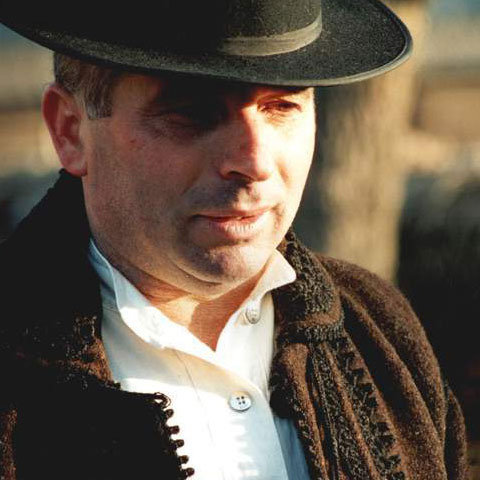
Grigore Lese - Pasaruca de pe munte (Roberto Bruno Remix)

Grigore Lese sings Romanian folk music at Shanghai EXPO 2010

"Grigore Lese’s concert on the stage in Europe Square, in Shanghai opened the special events scheduled to happen on Romania’s National Day, at the Shanghai EXPO 2010, on Sunday July 25.
According to the release the Romanian Foreign Ministry (MAE), over 500 viewers were watching, a-90 minute genuine Romanian folk music show, presenting ancient songs that succeeded mesmerizing the audience, making them to step beyond cultural and language boundaries.
Lese’s repertoire encompassed genuine Romanian folk songs marking the important events of Man’s life, like birth, baptism, wedding, and burial, along with contemporary ballet and very old music performances.
‘I’ve been excited, because I was singing in an open square, instead of a performance hall. People come, watch the show, go shopping, admire things, talk and leave. Despite all this, they were attracted and kept watching the show, they came and listened to our music. I chose a recital binding together musical structures of the Asian culture,’ the protagonist confessed for the Romanian pavilion’s newsroom.

 
Poland’s Consul in Shanghai Tomasz Rogowski, attending the show on Sunday, said that the Romanian singer’s performance was one of the most successful of Shanghai EXPO 2010, so far. ‘It was an authentic show, to the most proper sense of the word. A show that marks you, the maestro who was singing is a perfect artist.
In a globalized world where all things begin looking alike, Romania, today, has offered us something quite different. Such shows represent genuine values, I was watching the show fully fascinated,’ Rogowski said. Grigore Lese’s performance contributed to the affirmation of the Romanian identity at the Shanghai EXPO 2010, mirroring the Romanian people’s creativity and bringing together several cultures whose universal denominator is the folklore’s genuiness." Article source: www.financiarul.ro.

Delerium - Silence (Kostas B. Remix)

"Kostas B. is a 17 year old composer/producer. It all started already at the age of 6, in Greece. His favorite hobby was to record and mix down music from the radio to tapes, he did that almost every day. Since little kid he liked pop-disco music. Next year, 1998, he begun to take piano lessons. That didn't go so far and after a year he quit. After 3,5 years, at the age of 10, did Kostas B. and his family move to Sweden. There bought his parets a present to him, a nice computer and a Internet connection. Since then everything happened, he begun to listen to Trance music and Dance music, like Tiesto, Above and Beyond, Underdog Project, Bob Sinclair, Benny Benassi and many more. He got curious if there was any mixing programs on Internet so he searched on Google and found Traktor DJ Studio. When he got that, he directly started to mix.
Some months later he noticed that mixing was nothing for him. He felt more like composing his own music! He thought it would be impossible first but when he found Fruity Loops did everything change. He saw that he had a chance to go forward with it. So he begun to make his first Trance loops. After composing 3 years with Fruity Loops, he decided to try any other program. Under these years he composed music genres like HipHop, Trance and House until he decided to only compose House/Electro music in future. So he got Ableton Live, bought a studio microphone, a sound card and a keyboard that he had since he was little. First he had no clue how to use Ableton and it seemed very complicated, but after some time he learned how to record and put some samples. The time passed and he learned more and more. He liked it so he decided to use it in future. Now five years has passed since he made his first sounds and only one thing is for sure... many more will pass!" Article source: Kostas B. on MySpace.

Airscape & Jes - My Love (Daniel Wanrooy & Mark Green Remix)

"Hailing from the flatlands of Dordrecht, Southern Holland, Daniel Wanrooy has been influencing the playlists of some of the world’s top DJs for over 6 years. Both as one half of highly-lauded duos Progression & Odyssee and as a standalone artist, his evocative, imaginative music has successfully cross-bred virtually every sub-genre of trance.
EDM life for Daniel started in the early 90’s when he began messing around with electronic instruments. Experimenting with the first Tracker programs, he learned to make music by the well-traversed method of trial and error! Age 24 he signed his debut single ‘Roda Summers’ to Ton ‘Three Drives’ T.B.’s well-respected Massive Drive label. Launching his production career in earnest, it garnered plays from Armin, Rank 1 & Misja Helsloot among many others.
2004 though proved to be Daniel’s big, graduating year as he banded together with fellow friend & producer Robin van de Wiel… Pooling resources as well as knowledge they released several tracks before launching a second act under the name Progression. Touting around various Dutch labels, they were snapped up by Fundamental Recordings. The 12” ‘Purify’ & ‘Ocean Green’ (2004) were quickly followed by ‘Indeep Sounds’ & ‘Sands of Time’ in 2005.

It was around this time that Daniel flew unmistakably onto the radar of über trance talent-spotter Tiësto. Over the last three years, the luminary’s has used an unprecedented 4 tracks of Daniel’s work on his mega-selling ‘In Search of Sunrise’ series. In 2005 Odyssee moved over to Black Hole with the pair licensing the double-header ‘Frontline’ & ‘Evolution’. In tandem, they also moved Progression over its sub-label I.T.W.T. (In Trance We Trust) with ‘Superstitious’ and subsequently onto Magik Muzik for ‘Technophobia’ & ‘Loving Memories’ in 06.
Staying true to the act’s name (and completing the circuit of Tiësto’s labels) Progression unleashed their debut long-player ‘Different Day, Different Light’ in 07 on Black Hole. Marked up by MTV as “two hours of fascinating music”, it received a huge reception from press and DJs alike.
A wish to see his tracks working from the perspective of the DJ booth along with a desire to travel the globe prompted Daniel to take the DJing plunge in 2003. DJ dates have given him an invaluable POV, increasing his knowledge of how to make his music even more floor-effective. He cut his teeth at an I.T.W.T. party at Backstreet in Eindhoven and has subsequently warmed up for Tiësto, spun at the legendary Heineken Hall in Amsterdam & played to 15,000 strong crowds across Europe. He now DJ’s regularly in the UK, as well as dates right across the world.
Mark Green (1977) was born and raised in Breda. In his school years he discovered dance music and was immediately interested. As with so many young DJs, he got to know fellow disc jockeys through the music store where he used to buy his records on a weekly basis. Eventually, buying records became a regular meeting, with cups of coffee and endless conversations about hot new tracks, leading to new friendships with such names as Dazzle and Cor Fijneman. It was during these moments that he met with DJ Tiësto and found his inspiration to start spinning vinyl himself.
The year 1994 formed the landmark for Mark to introduce the world of dance to his name DJ Mark Green, nowadays simply written as Mark Green. Radio performances became a regular part of his everyday life and slowly but surely he established his reputation during both small and bigger gigs, leading to his kick-off in 2002 as resident DJ for the Tiësto ‘sanctuary’ better known as The Spock. His residency there not only proved that Mark Green had the skills to entertain his audience, but also that he was the perfect choice for flawless mixes, which was unanimously underlined when he won the Dutch Mixing Championships in that same year. The small club became a source of various experiences on several levels; especially in the field of an ever changing audience which forced him to be on top of things and building on solid technical skills. Besides his residency in Spock, which eventually ended early 2007, he was the driving force behind ‘Spectrum’; a monthly techno based night with established names and new talent.
Over the years, Mark started playing mixes with an ever growing variety in styles, basically defining his own ‘sound’. The different audiences he faced every week at Spock simply forced him to widen his horizon with Club, Funk, Trance and Techno influences, from which the latter has his main interest.
Mark nowadays makes a living as A & R manager of Black Hole Recordings and is responsible for a steady output of high quality dance in general and trance in particular; at the same time scouting fresh new talent, making sure that he delivers real artists that maybe once dreamed of the job he finally found.
Mark Green continues DJing all over the country as much as possible and is determined to develop his career with producing his own music." Article sources: www.danielwanrooy.com, Mark Green on MySpace.

Saturday, August 7, 2010

Supermode - Tell Me Why (TV Rock Remix)

"In the spring of 2006, Axwell & Steve Angello joined forces to create Supermode. Their first big hit, “Tell Me Why”, remixed Bronski Beat’s “Smalltown Boy”, since the sample from the original song repeats “tell me why” (which is not a sample from the song “Smalltown Boy”, but from Bronski Beat’s second No. 1 Hit “Why”). The song was released under the Data records label.
 Axwell is part of what has become known as the ‘Swedish House Mafia’ along with Sebastian Ingrosso, Eric Prydz and Steve Angello.
Axwell, born Axel Hedfors in the Swedish countryside, found that music was in his system from a tender age. Playing the drums at the age of 9, he became frustrated with his fellow classmates who could not keep up; he traded his drums at the age of 13 for a computer so he could play all the instruments himself.
Axwell released alot of acidtechno music made with Fasttracker2 in the years of 1995-1997 under the pseudonym Quazar (of Sanxion) and was featured in the intro of the warezgroup Hybrid’s crack of the classic computer game Worms 1. During this time he also competed in music competitions, most notably at the demo party Hype in southern Sweden. During the mid-2000s, Axwell rose to prominence as a solo artist. His hit “Feel the Vibe” was very well received on European dancefloors, and once the track soon picked up support from a host of big DJs it was re-released with a vocal, reaching #16 in the UK charts. Other famous tracks include ‘Watch the Sunrise’ as well as dance music remixes of Hard Fi’s ‘Hard to Beat’ and Roger Sanchez’s ‘Turn on the Music’.
Steve Angello
It all kicked off for Steve Angello when he released ‘Woz not Woz’ alongside fellow Swede, Eric Prydz in 2004. It was released on CR2 Recordings and elevated Steve to become one of the most in demand producers, remixers and djs of 2005. This year alone has seen Steve have two top 5 club hits, remix the likes of Moby, Goldfrapp, Royksopp and Deep Dish, release a Subliminal Sessions cd, be nominated for ‘Best Producer’ at the House Awards, and also win the acclaimed ‘Best Newcomer’ (alongside partner in crime, Sebastian Ingrosso) at this years DJ Awards in Ibiza.
At 22 years old, Steve has earnt the reputation as a consistently fresh talent, a vehicle for which is his label, Size Records. Drawing heavily on influences such as Daft Punk and Carl Craig, Size Records was conceived in 2002, and has since had thirteen rollicking releases, most recent being the 2 hits, Who’s Who? “Not So Dirty” aka Steve Angello and Full Blown ‘Some kinda Freak’. The label has received massive support from the biggest dance superstars like Pete Tong, X-Press 2, Roger Sanchez, Funk D’Void, Carl Cox, Alex Neri, Norman Cook, Armand Van Helden, and Erick Morillo to name a few…
It was in early 2005 when Erick (Morillo) recognised the potential of Steve and Seb in signing them immediately to his Subliminal team… Steve and Seb went on to mix Subliminal Sessions 8 alongside Jose Nunez which was released in May 2005… this was to be one of the most popular Subliminal cds and would see Steve & Seb securing residencies at the infamous Subliminal parties at Pacha, Ibiza. If you have been lucky enough to witness one of their gigs, I am sure that it would be your Ibiza memory of the year!
Steve’s highly charged sets have scored him thousands of adoring fans around the World! Djing every weekend non-stop for the last 12 months, his diverse sets keep the crowds electrified, and no matter how many times you see him play, you will rarely hear the same track twice! His ability to connect with the crowd is intense, and it is as if he reads your mind when you hear the bass drop of a track you have been waiting all night to hear. The music screams at you; passion; commitment; dedication; focus; drive; and energy: music is no idle pastime for Steve, it’s everything. It’s hard to believe that the quality of the music comes from someone so young but Steve pulls it off.
In addition to all this, Steve’s appeared on Radio 1 with Pete Tong earlier this year, and has since been asked back to record an exclusive Essential Mix with Sebastian to be broadcast in September. This is further to Steve featuring on the 3G Tong Mobile Show, where he was labelled a hero of 2005. Being no stranger to this accolade, Steve says, “I’m just lucky to be doing what I’m doing. If I didn’t have the music I don’t know where I would be today. I’m just happy and trying to enjoy life!”
So what does the future hold for this remarkable young man? Lets just say, a continual release of amazing top quality tracks on the Size label, a possible compilation cd to be released next year, an album with his partner Sebastian, and a remix of the Eurythmics classic “Sweetdreams”." Article sources: www.last.fm, part1, part2, part3.

Yves Larock & Steve Edwards - Listen To The Voice Inside (Rivaz Remix)

 "Steve Edwards - outstanding songwriter, singer and live performer. This son of a preacher man first came to prominence in the steel city of Sheffield, UK where he immersed himself in a thriving music scene that has seen so many great, innovative artists come out of this city of soul.
Steve was quick to establish his own sound, and with a love for all things Organic & Electronica, he created a style he likes to call 'Organica', which is the equivalent of having the likes of Lennon, Marley & Costello playing in a Clash tribute band then going to the aftershow party with Daft Punk on the decks, Gaye & Simone behind the bar with Prince & OutKast scuffling outside the door trying to get in!

Steve's resume has been propped up by some fairly weighty collaborations. He has written, co-written and performed on many of the dance music industries biggest and most iconic hits including those from the Basement Jaxx (the Rooty album), Paul Van Dyke, Cassius (Sounds Of Violence) a US Billboard No 1, Bob Sinclar – with whom ‘World Hold On’ became a Grammy nominated ‘Best Single’ whilst racking up 2.6 million in sales along the way, X Press 2 (Muzikism), Moloko (Statues) and Axwell (Watch The Sunrise), to name only a few. Headhunted by the cream of dance music production houses, in the last year alone Steve has completed tracks for Michael Gray, Mark Wilkinson, D Remirez, Sandy Rivera and most recently, another, - and most notably overdue - sure fire future hit with Bob Sinclar, due for a March 2008 release on Defected Records. As Steve’s career continues to flourish as both an Artist and a producer, his talents are in high demand around the world, proving his reputation is more than deserved. Having recently completed production work with band of the moment Reverend & The Makers - one the biggest new bands to emerge from the UK in the last twelve months, singing on two tracks from their new Album, 'State Of Things', including the next single 'Open Your Window' & album track 'Miss Brown' - his stock behind the Mic and demand for his writing skills has never been higher.
With a firm grasp on 2008 and beyond and never one to stop broadening his horizons, Steve has been busy putting together a live music team that resonate style and uber coolness, playing an Electro/Punk/Funk/Rocksteady soundclash with an MO that is simply, to have a good time, make you sway & your ears bleed. With life long friend and producer Fill Jones he’s created ‘Lords Of Flatbush’, alongside ex Arctic Monkey, Andy Nicholson, an original member of a band that have rapidly achieved legendary status and had one of the biggest selling debut albums of all time 'Whatever People Say I Am That's What I'm Not'. Combining classic songwriting with cutting edge production and a real passion for live performance, Steve has been unjustly under the radar for a little while but has now decided to give up his day job of writing for the great & the good, stop giving away his best songs & have some fun himself." Article source: www.officialsteveedwards.com.

Friday, August 6, 2010

Sash & Stunt - Raindrops (Fonzerelli Remix)

"Northern Ireland based Aaron McClelland, the production genius behind Fonzerelli smashed onto the scene and quickly rose to prominence becoming one of the most established and hottest production talents in the world with his first release “Moonlight Party” in 2005 which became # 1 Download Of The Year on DJ Download and shot his own Mena Music label to # 1 Label Of The Year on DJ Download becoming a hit in Australia and Holland and more importantly a beacon to Aaron’s talent.
Every major and many minor labels around the world were lining up requesting Fonzerelli remixes and it was just as well that Aaron is insatiably creative and super prolific as he was asked a lot and he fulfilled pretty much every request often making 2 or 3 original tracks in a day notching up hundreds of productions under his belt including mixes of several Top 5 acts such as Fedde Le Grand, J Magik & Wickerman, Chanel, Sash, Mauro Picotto, Beatfreakz and Tiesto ft Maxi Jazz as well as original material for his own Mena Music label and Big In Ibiza.
Not content to just incorporate 80s instruments and sounds into his productions like many of his contemporaries Aaron actually plays all the instruments and prefers to use original real synths as opposed to computer emulations and is often found buying up racks of old second hand synths and Casio keyboards to get that unique and original feel and sound that his records are known for.
Spending half his time producing under his various aliases including Yer Man, Brazen (#1 Beatport) & Digital Glitter among others, Aaron spends the other half indulging in his new found hobby of renovating classic 70s cars including his current project a VW Campervan! Funnily enough Aaron was nicknamed Fonzerelli by friends in Ballymena following an early sideline to music production of buying and selling vintage clothes on eBay (I guess there was plenty of 50’s gear in there). So Fonzerelli, the vintage clothes seller from Ballymena became one of the hottest producers on the planet!
As the masked crusader for ‘real’ dance music, Fonzerelli’s studio layer is where he creates his weapon of choice – synth driven, retro, pop-club anthems – used in his mission to battle the darkside of dance music – ‘boring tracks where nothing much happens’. His new single “Dreamin’ (Of A Hot Summers Night)”, taken from his forthcoming San Franz Disco album is aimed at stripping away the underground elements of club records, replacing them with catchy vocals, hooks and melodies that set his music completely apart from the rest.  
Fonzerelli is one dance producer who, despite his huge global success over the last few years has remained one of these mysterious entities, where the music remains the most important aspect of who he is. He’s had Top 40 hits in countries across the world and he’s worked with a host of Top 5 UK acts, remixing for every major record label and the majority of independents, including being the only other producer to appear on Basshunter’s debut #1 platinum selling album. His pivotal influence in the 80s pop revival that is currently seen in the UK charts week in week out is wildly understated with his 80s-infused, synth-filled club smashes having graced dancefloors over the world for years before the rest.
Despite his desire to first and foremost remain a musician, to prove he is capable of being the superstar DJ, Fonzerelli occasionally selects a moment to appear. This includes following a personal request by Tiësto for him to play at his sell-out event in the world’s biggest club, Privilege Ibiza.

San Franz Disco

Fonzerelli (Aaron McClelland) has been working on his debut album for the last 8 months utilising his trademark electronic 80’s synth and drum machine soundscape, juxtaposed with insanely simple pop vocals. However, the album explores the song far more than Fonzerelli has before, due to the straight jacket of the remix and club cut format in his earlier work being removed. Now he has brought to the foreground the melodic and textured elements that previously were the high points of the 6 minute extended mixes he made. Now its 3 minute songs where the club chaff has been stripped out leaving what Aaron “Fonzerelli” McClelland believes to be the best bits (something strange for a succesful club producer in this day and age). Fonzerelli uses vintage equipment as well as cutting edge computer technology giving him his own more distinctive style which has set him appart from the “me too” crowd. This is even more evident in his song productions as he his not pandering to any dancefloor only his own musical and commercial passions. Fonzerelli’s “San Franz Disco” album will be released in 2010." Article source: www.fonzerelli.info.

T.A.T.U. - Not Gonna Get Us (Club Mix)

"Fierce brunette Julia Volkova and sprightly redhead Lena Katina are Eastern Europe's most popular musical exports. In the age of 24/7 televised entertainment, you've likely caught a glimpse (or quite more) of these Russian pop-sensations and full-time mess-with-your-expectations media mavens. During t.A.T.u.'s short five years together, the two diminutive, talented beauties have caused one hell of a worldwide ruckus, routinely playing to audiences of 50,000 fans and selling more than 5 million copies of their debut album, 200 km/h in the Wrong Lane. Infamously, they refused to perform at the World Music Awards unless provided with real guns. Explains Lena, "We wanted real machine-guns, but they didn't give us, so we wouldn't perform, that simple."
 Brazenly, after promising not to kiss on the Tonight Show, they engaged in a long, passionate wet one-- much to the alarm of anxious network censors, (and well before Britney and Madonna's little stunt, ahem). And yet, when expected to do the same on Jimmy Kimmel, they deliberately offered not so much as a sweet peck on the cheek. Why? Explains Julia, "Basically, because we like to do what we want. A lot of people are, like, 'you shouldn't do this, you shouldn't do that, you shouldn't behave in this way.' But you know what? Actually for us, we are the way that we are, and we don't really live in fear of anybody. So, if we behave in a certain way, then that's just actually the way we are." 
 LENA'S BIO
Lena Katina was born in Moscow on October 04th, 1984 in the family of the famous musician - Sergey Katin - who collaborated with "Dyuna", Marina Khlebnikova and other representatives of Russian show-business. Starting from being 4 years old, Lena began, on her father's initiative, to attend various sport and music clubs for the purpose of fostering plastic arts and artistic talents. When she was seven, Lena entered an ordinary school and within a year she entered music school, piano class. When she was ten, she became a soloist of the famous children group "Avenue" where she sang for 3 years. When she was 13, Lena became a member of vocal and instrumental group "Neposedy" (Naughty Children) where she met Julia Volkova with whom she became friends. At the casting, she sang a song in Spanish and the jury were astonished by the quality of her voice. Soon Lena left the group due to her age - children sing in "Neposedy" up to 14 years old. At the age of 15 she successfully passed the casting for the musical project which was later named "Tatu". Later on, another girl joined the project - Julia Volkova who turned out to be at the second position according to the casting results, right after Lena.
JULIA'S BIO
Julia Volkova was born in the family of a successful businessman in Moscow on February 20th, 1985. At the age of 7, parallel to the ordinary school, Julia entered a music school, piano class. When she was 9, Julia became a member of the famous children vocal and instrumental group "Neposedy" (Naughty Children). At the casting Julia sang Russian folk song "Oy, to ne vecher". In a year, Lena Katina became a member of "Neposedy" as well, and soon Julia and Lena became best friends. When she was 11, Julia switched the ordinary school where she studied for the school fostering artistic talents. Three years later she leaves "Neposedy" to pass the casting and join musical project Tatu in which Lena Katina had already been in. At the age of 15, Julia enters vocal department of Gnessin's State Musical College and simultaneously becomes famous as a soloist of Tatu duo. In 2004 she had a baby. Now she is 20." Article source: www.tatugirls.com.
free counters
Music Top Blogs Top Academics blogsBlog Directory & Search engineOnline MarketingMusic blogs & blog posts BlogRankers.com

wibiya widget